Kodak Ektar 100 - 120 Film
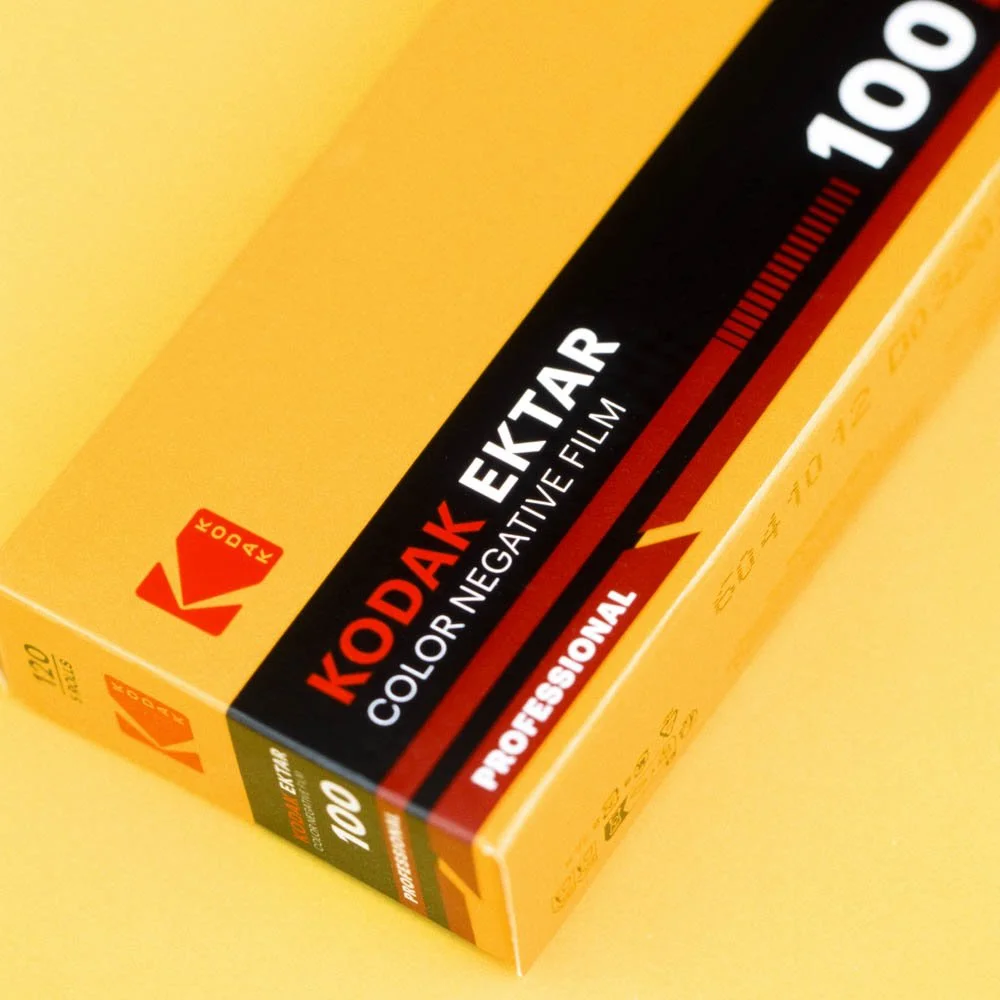


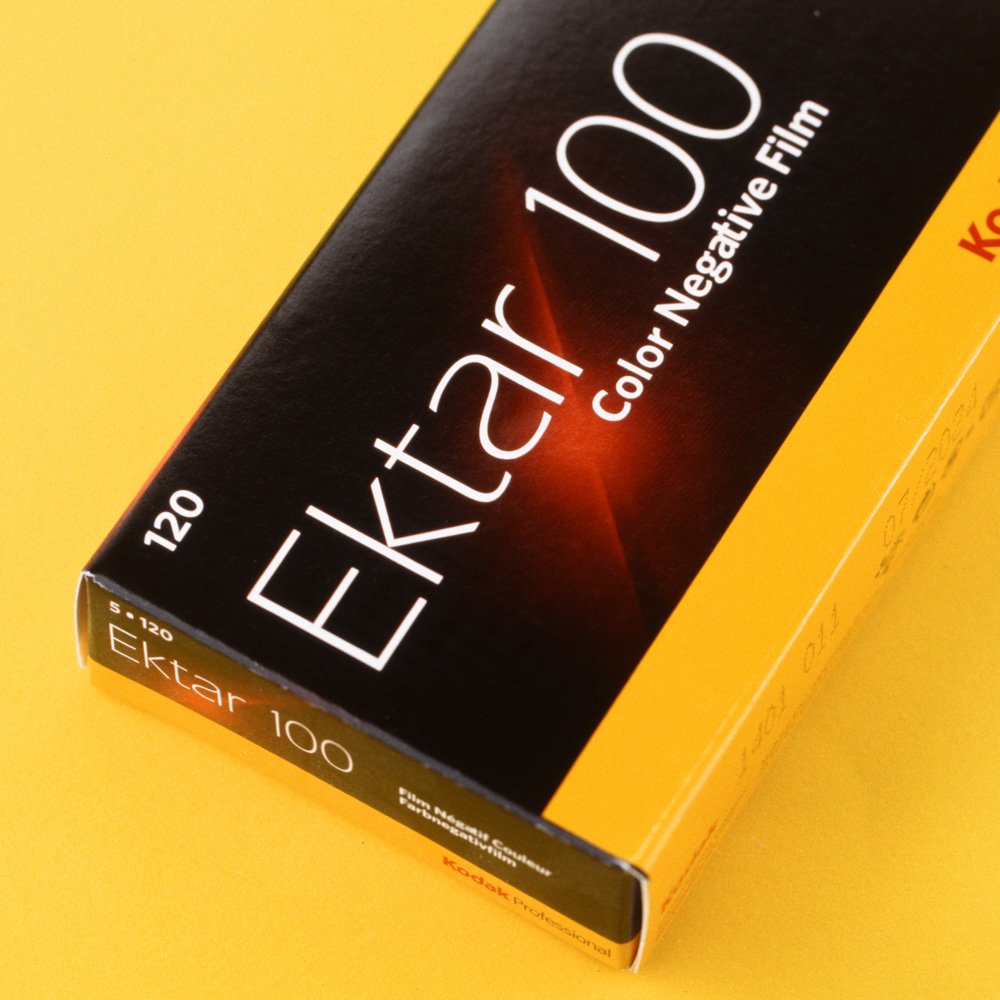
Kodak Ektar 100 - 120 Film
Kodak Ektar 100 – 120 format colour negative film
ISO 100 daylight-balanced C-41 process
Extremely fine grain — T-GRAIN emulsion with VISION Film technology
Ultra-vivid colour saturation with high sharpness
Advanced cubic emulsions and proprietary DIR couplers for edge definition
Optimised for scanning and large-format enlargement
Less forgiving than Portra — expose carefully, especially with skin tones
Best for: landscapes, nature, travel, architecture, and outdoor photography
Kodak Ektar 100 120 Film (C-41)
Kodak Ektar 100 is the sharpest, finest-grained colour negative film in production. In 120 format, it's a formidable tool for medium format photographers who want maximum technical performance — ultra-vivid colour, exceptional detail, and a grain structure so fine it can be hard to distinguish from a well-exposed slide film at a glance. At $26.50 a roll, it sits firmly in professional territory, and it rewards the care and precision you bring to it.
Ektar was launched in 2008 as the world's finest-grained colour negative film, a title it still holds. It uses Kodak's T-GRAIN emulsion technology — the same family used in the TMAX black and white films — combined with VISION cinematic film technology for a smooth, optimised grain profile that performs particularly well on modern scanners.
Why photographers love Kodak Ektar 100 in 120
When the light is right and your exposure is dialled in, Ektar 100 in 120 is one of the most spectacular colour negative films you can shoot. Greens are lush and saturated, blues are deep and vivid, reds and oranges pop with intensity. The larger 120 negative takes everything Ektar does in 35mm and amplifies it — the grain virtually disappears, the detail is extraordinary, and the colour rendering under good light is genuinely jaw-dropping.
It pairs brilliantly with medium format cameras that reward careful, considered shooting: the Hasselblad 500 series, Mamiya RB67, Mamiya 7, Pentax 67, and Fujifilm GW690 all suit it well. Ektar is a film for photographers who take their time — it rewards precise metering and good light with results that are hard to achieve any other way.
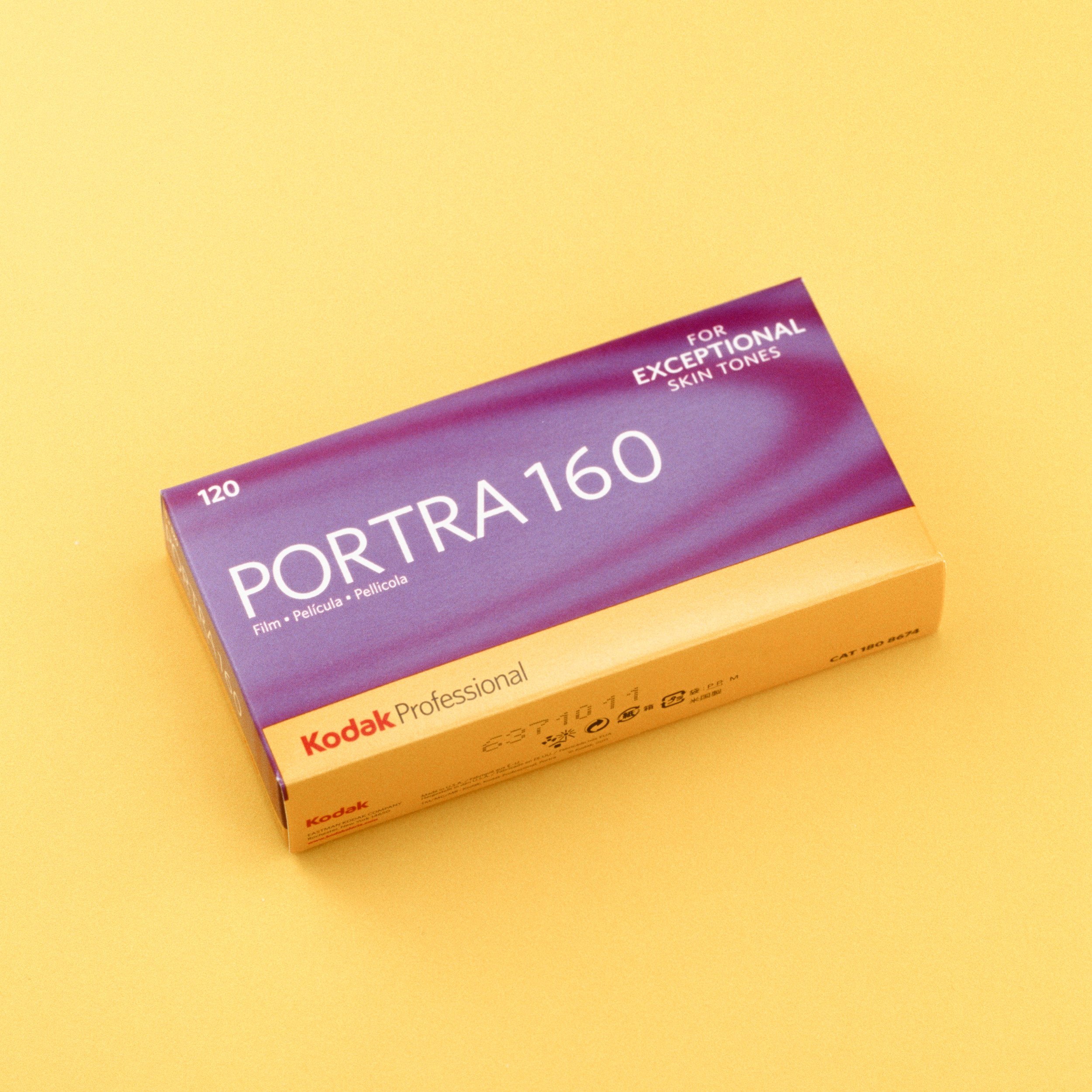
The caveat worth knowing: Ektar is not a forgiving film for portraits. Its vivid colour rendering can shift skin tones cool or magenta when underexposed, and it doesn't flatter skin in the way Portra does. For landscapes, architecture, travel, nature, and commercial work it's exceptional. For portraits, Portra 160 or Portra 400 in 120 are the better choice.
A bit of film history
Ektar 100 was launched by Kodak in 2008, positioning it as a professional-grade colour negative with technical performance that rivalled slide film. It replaced the earlier Ektar 25, which had been discontinued in the 1990s. At launch it was available in 35mm, 120, and 4×5 sheet film formats — the 120 version quickly became a favourite among landscape and travel photographers who wanted the finest quality from their medium format systems. It remains one of the most technically accomplished colour negative films available today.
Processing
Kodak Ektar 100 requires standard C-41 colour negative processing. We process C-41 in-house at Ikigai Film Lab in Melbourne, with scanning available on our Fujifilm Frontier and Noritsu HS-1800 scanners. Given Ektar's extremely fine grain and high sharpness, it scans particularly well — you'll see more from this film with a quality scan.
Common questions
Is Kodak Ektar 100 120 good for portraits?
With care, yes — but it's not ideal. Ektar's vivid rendering can push skin tones cool or magenta, particularly if you underexpose even slightly. It can work beautifully for environmental portraits in good light where accurate skin tone isn't the priority, but for traditional portrait work Portra 160 or Portra 400 in 120 are far more forgiving and flattering. Expose Ektar at box speed or slightly over if shooting people.
How does Ektar 100 120 compare to Fujifilm Provia 100F 120?
Both are ISO 100, both are high-resolution, and both reward precise exposure. Provia is a slide film — E-6 process, completely different rendering. It's more neutral and accurate in colour, with slightly cooler tones and less saturation than Ektar. Ektar is warmer and more vivid, with more latitude for exposure error, and you get a C-41 negative rather than a transparency. For scanning, Ektar is arguably the easier workflow. For projection or viewing on a lightbox, Provia is in a class of its own.
How does Ektar 100 120 compare to Kodak Gold 200 120?
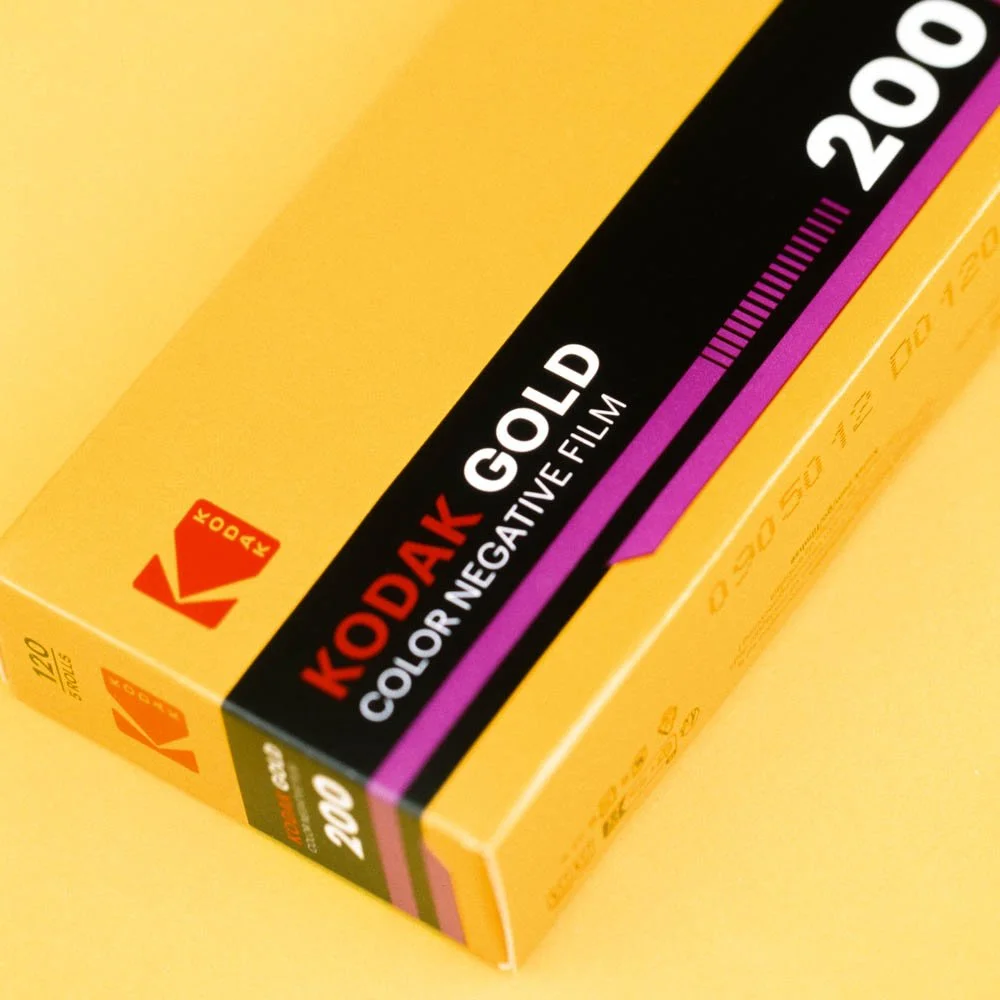
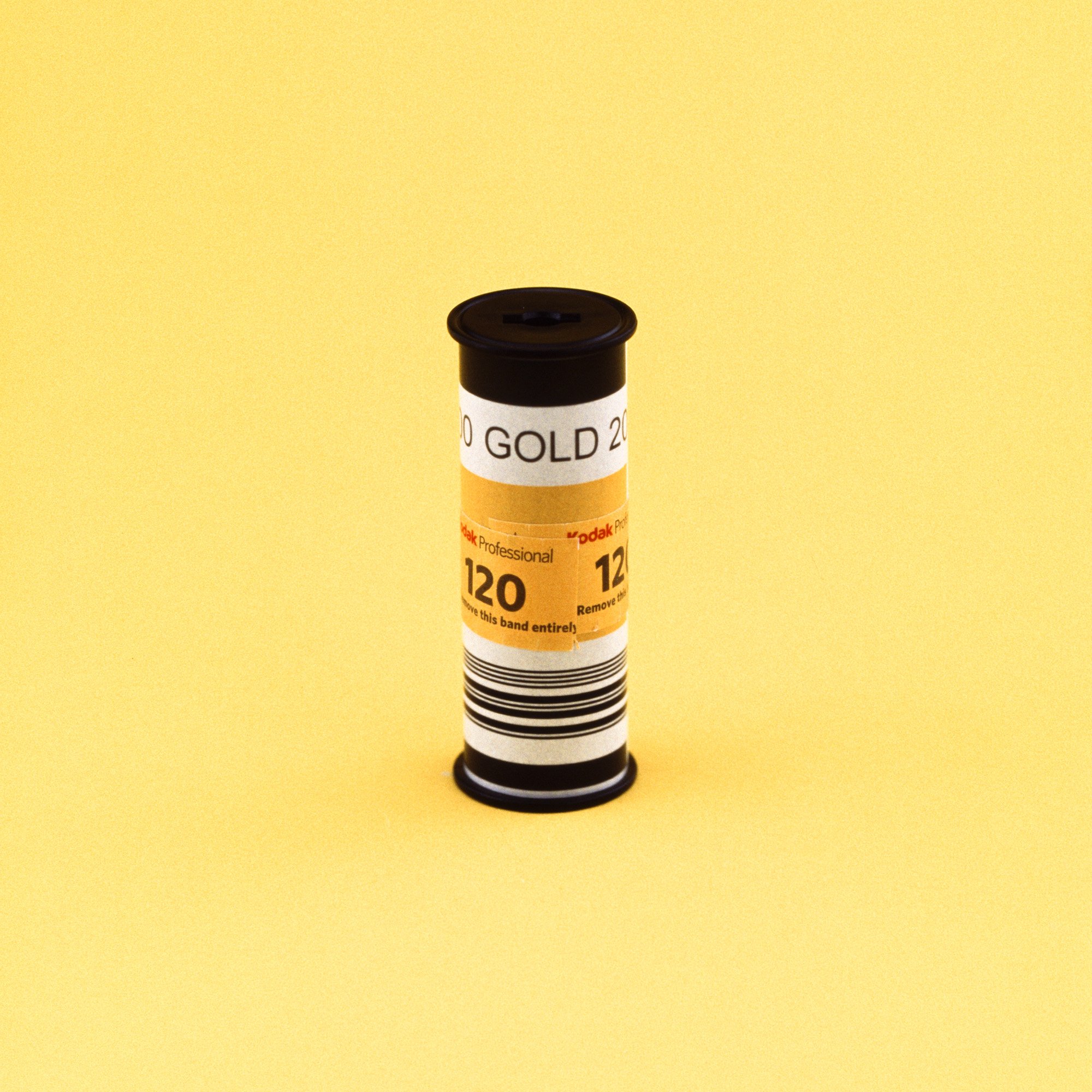
Very different films. Gold 200 is a consumer film with a warm, nostalgic character and generous exposure latitude. Ektar is a professional film with ultra-vivid colour, extremely fine grain, and much less tolerance for exposure error. Gold 200 is more accessible and forgiving; Ektar delivers higher technical performance when shot well. For landscapes and travel where you can control your exposure, Ektar is the superior choice. For everyday shooting where you want warm, pleasing results without stress, Gold 200 is the better fit.
Does Ektar 100 push or pull well?
It's not really designed for it. Pushing Ektar increases contrast, saturation, and grain in ways that can become unpleasant quickly. For best results, shoot it at box speed in good light and expose accurately. If you need more speed, choose a different film rather than trying to push Ektar.