Ilford XP2 400 - 120 Film
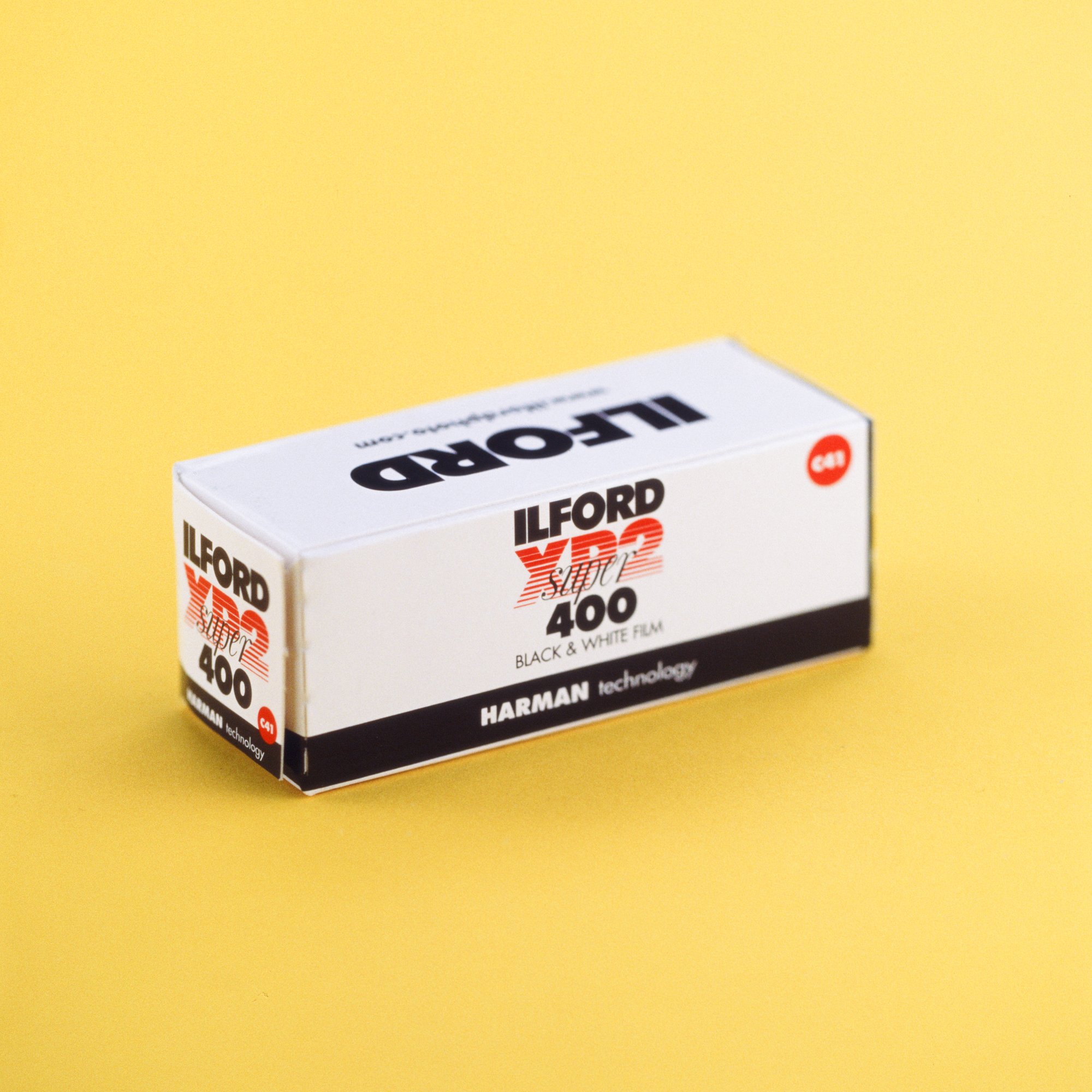
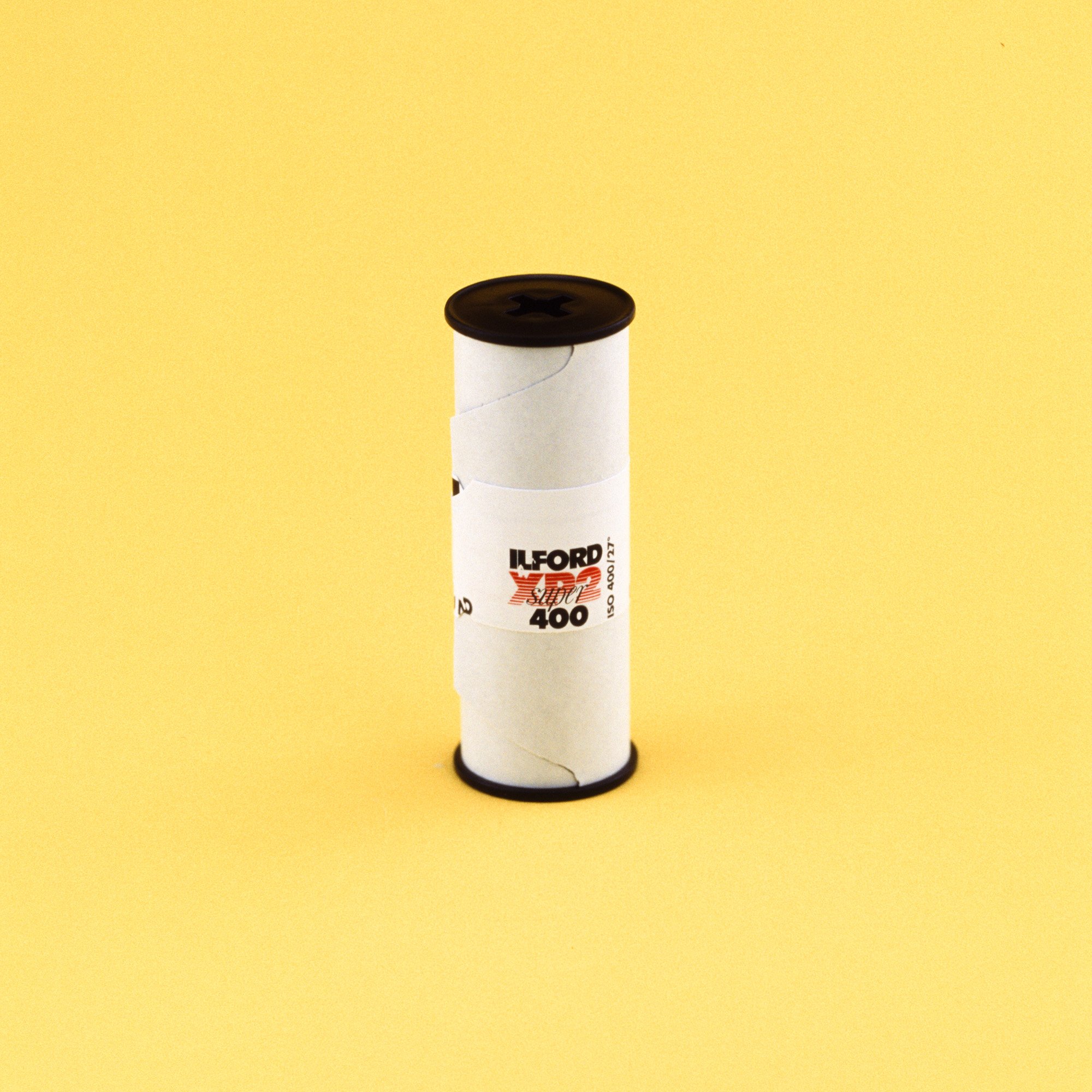
Ilford XP2 400 - 120 Film
Ilford XP2 Super – 120 format chromogenic black and white negative film
ISO 400 — processed in standard C-41 colour chemistry (not B&W chemistry)
Extremely wide exposure latitude — usable from ISO 50 to ISO 800 on a single roll
Very fine grain with high sharpness — significantly finer than conventional ISO 400 B&W in 120
Grain character changes with exposure rating — finer at lower ISOs, more pronounced at higher
The only chromogenic black and white film available in 120 format
Can be printed on traditional B&W papers or RA-4 colour papers
Best for: medium format photographers who want B&W processed with colour rolls, travel, and variable lighting conditions
Ilford XP2 Super 120 Film (C-41)
Ilford XP2 Super in 120 is a genuinely unusual film — probably the most practically convenient black and white option in medium format, and one that produces results that often surprise photographers who haven't shot it before. It's a chromogenic film, which means it uses colour dye technology rather than conventional silver halide, and it processes in standard C-41 colour chemistry. The same tank, the same chemicals, the same time and temperature as every colour negative film you've ever shot.
In 120 format, this workflow advantage is even more valuable than in 35mm. Medium format photographers often shoot colour and black and white on the same session, historically requiring separate processing orders. With XP2 in 120, your B&W rolls go in with your colour rolls and come back together. One order, one turnaround, no compromise.
It also happens to be the only chromogenic black and white film available in 120 format anywhere in the world. There is no alternative for this specific combination of qualities.
Why photographers love Ilford XP2 Super in 120
The combination of chromogenic C-41 processing and a 120 negative produces results that are genuinely distinctive. In 120, XP2's already fine grain becomes even more controlled — the larger negative area means the grain is further reduced in apparent size, and the smooth, regular quality of chromogenic grain at medium format scale produces a rendering that can be almost difficult to distinguish from a slower, finer-grained silver film.
The tonal quality in 120 is rich and nuanced. Midtones are expansive and well-graduated, highlights hold texture cleanly, and shadows are open without blocking. It's a film with a gentle, sophisticated tonal curve that suits the kinds of subjects medium format photographers tend to gravitate toward — portraiture, still life, architecture, landscape work where tonal gradation matters more than gritty character.
The extraordinary exposure latitude is if anything more useful in 120 than in 35mm, where you have fewer frames per roll and more at stake in each exposure. XP2 rated anywhere from ISO 50 to ISO 800 on a single roll — with no push or pull development required — means you can move between bright outdoor light and dim interior light on the same roll without worrying about development compromises. In a Hasselblad 500, Mamiya RB67, Pentax 67, or Mamiya C330, this latitude is a genuine practical advantage.
The grain also responds creatively to rating. At ISO 200 the grain becomes finer and contrast compresses softly. At ISO 800 it opens up with more contrast and a more pronounced texture. One film, multiple looks — all controlled from your ISO dial.
A bit of film history
XP2 was introduced by Ilford in 1980 as one of the first chromogenic black and white films, using colour dye technology to produce monochrome images processable in colour chemistry. It has been refined several times since — the "Super" designation reflecting a significant emulsion improvement — and has remained in continuous production for over four decades. The 120 format has always been a smaller part of XP2's production than 35mm, making it a less commonly known option even among medium format photographers who might benefit most from it. It remains the only chromogenic B&W film in 120 production. You used to also be able to buy Fuji Neopan 400 with this same technology, and guess who helped make that happen…
Processing
Ilford XP2 Super 120 processes in standard C-41 chemistry — the same as any colour negative film. We process C-41 in-house at Ikigai Film Lab in Melbourne, with scanning available on our Fujifilm Frontier and Noritsu HS-1800 scanners. Include it with your colour roll order and it processes at the same time — no separate B&W processing required and no additional instructions needed. Note that XP2 must not be processed in standard black and white chemistry; it requires C-41.
Common questions
Can XP2 120 really be processed with my colour rolls?
Yes — completely. C-41 chemistry, same tank, same time and temperature as all colour negative film. Include it in your colour processing order and it comes back with your colour rolls as black and white scans. This is the film's defining practical advantage in medium format, where separate B&W processing orders have traditionally been an inconvenience.
Is XP2 120 the only chromogenic B&W film in 120 format?
Yes. Ilford XP2 Super is the only chromogenic black and white film produced in 120 format. There is no other film that offers C-41 processed black and white in medium format.
What ISO should I rate XP2 120 at?
Box speed is ISO 400, which gives the most neutral balance of grain and sharpness. The extraordinary latitude means you can rate it anywhere from ISO 50 to ISO 800 without push or pull development. Lower ratings produce finer grain and softer, more compressed contrast. Higher ratings produce more pronounced grain and more dramatic contrast. In 120 where frames are precious, having this flexibility on a single roll is a genuine asset.
How does XP2 120 compare to HP5 Plus 120?
HP5 is a conventional silver-based B&W processed in B&W chemistry, with a traditional grain character that has warmth and expressiveness. XP2 is chromogenic, C-41 processed, with finer and smoother grain, a more neutral tonal curve, and vastly more exposure latitude. HP5 has more personality and suits photographers who love the traditional B&W aesthetic. XP2 has more technical precision and far greater practical workflow convenience. In 120, the tonal quality of both is excellent — the choice comes down to aesthetic preference and whether you want to process separately from your colour work.
How does XP2 120 compare to Kodak TMAX 400 120?
TMAX 400 is a silver-based B&W with T-GRAIN technology — extremely fine grain, very high sharpness, processed in B&W chemistry. XP2 has similarly fine grain but with a chromogenic quality that's slightly different in character, and the significant advantage of C-41 processing. TMAX 400 is the higher-performance technical film for dedicated B&W work. XP2 is the more practical film for photographers who want B&W alongside colour processing without the workflow separation.