Ilford HP5 Plus - 120 Film
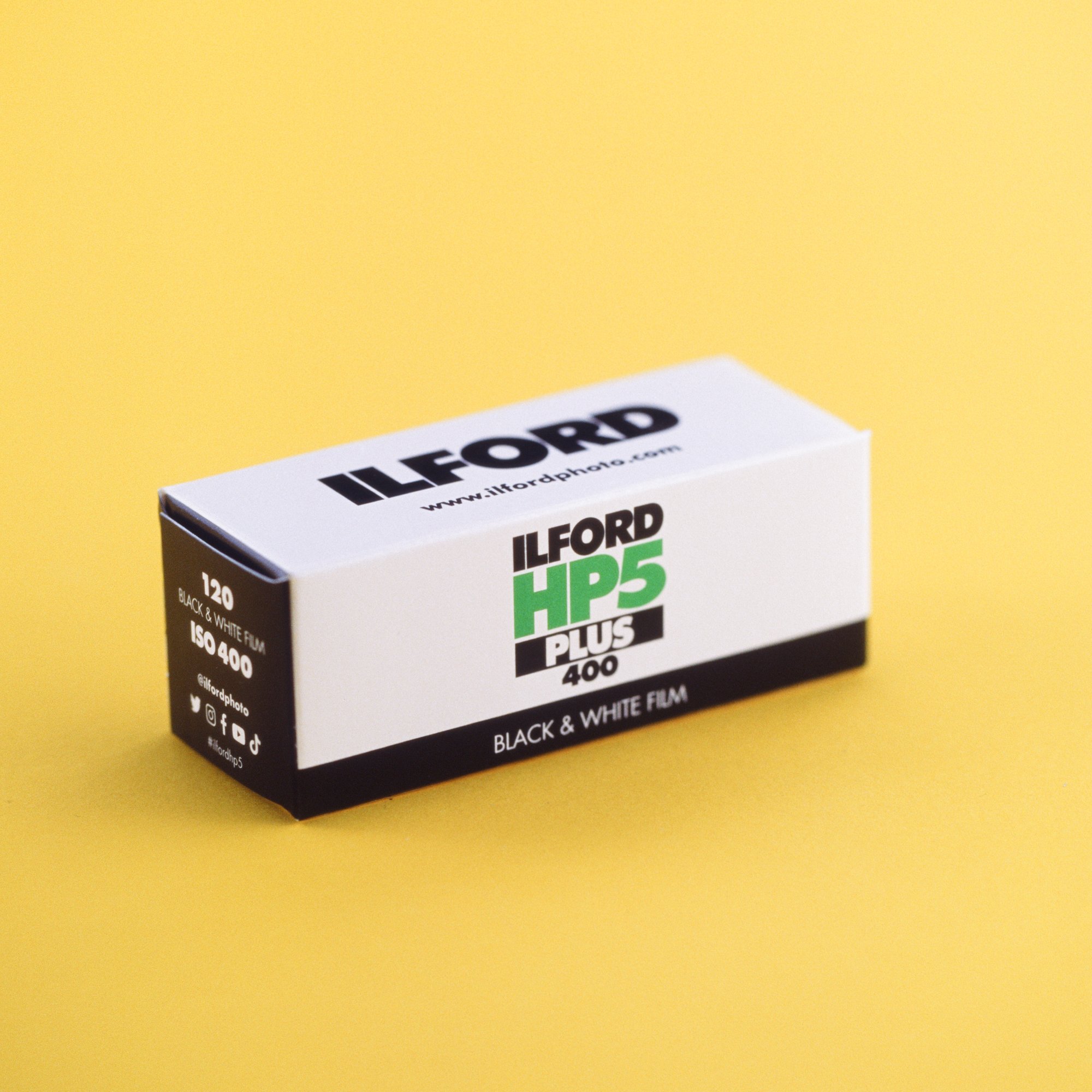
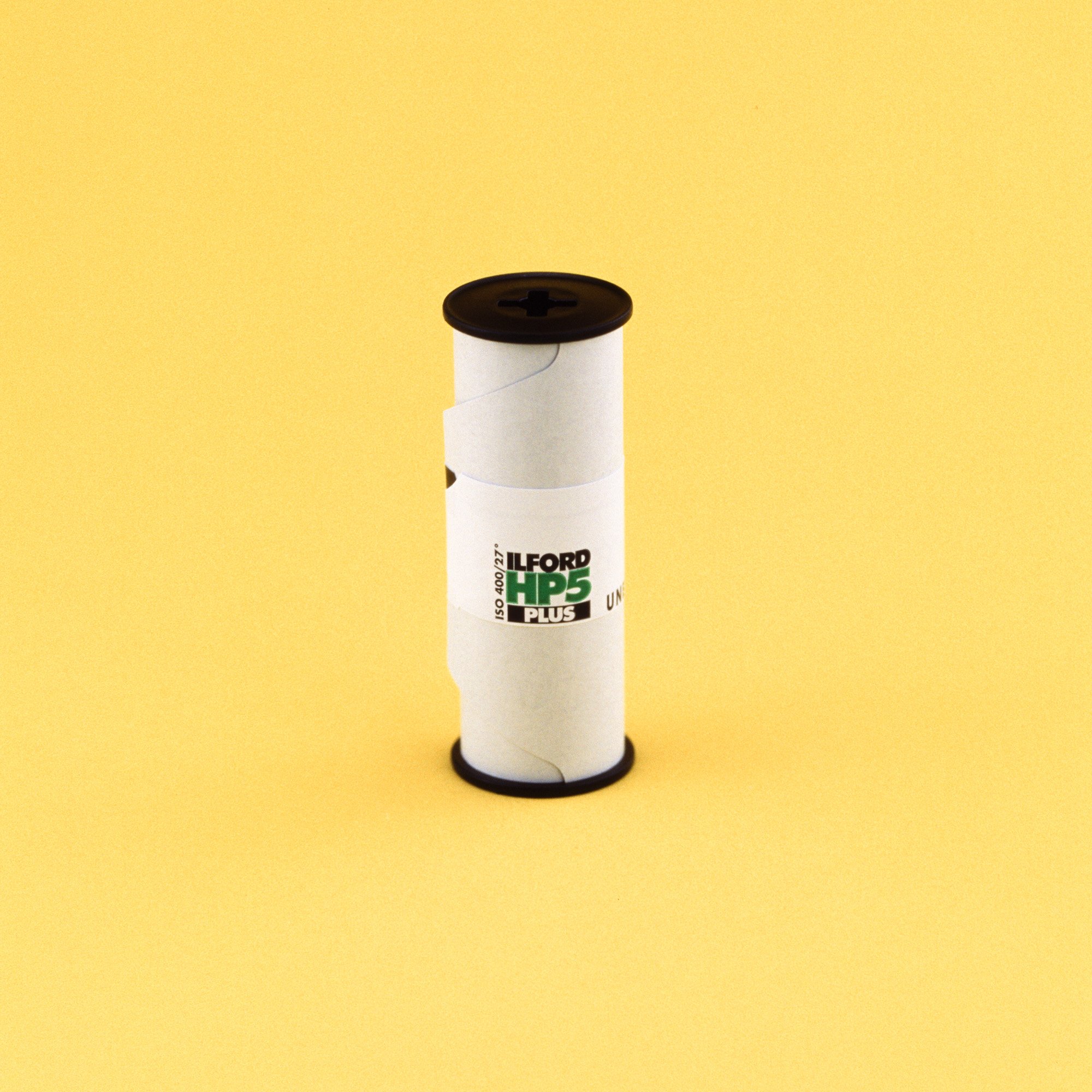
Ilford HP5 Plus - 120 Film
Ilford HP5 Plus – 120 format panchromatic black and white negative film
ISO 400 standard black and white development
Wide exposure latitude with medium contrast
Pushes beautifully to 800, 1600, and 3200
Handles mixed and difficult lighting conditions with ease
Sourced directly from Europe — not via the Australian distributor CR Kennedy
Best for: portrait, documentary, street, travel, and general medium format B&W shooting
Ilford HP5 Plus 120 Film
Ilford HP5 Plus in 120 is one of the great film experiences. The same emulsion that makes HP5 the world's most popular black and white film — versatile, forgiving, beautifully toned — across a medium format negative that elevates every one of those qualities. Grain that was pleasant in 35mm becomes genuinely refined in 120. Tonal depth that was good becomes exceptional. The combination of HP5's character and the larger negative area is one of the best things in analogue photography.
A note on sourcing: we import our HP5 Plus directly from Europe rather than through CR Kennedy, the Australian distributor for Ilford. This keeps our supply chain independent and ensures we're not reliant on local stock availability.
Why photographers love Ilford HP5 Plus in 120
HP5 has a classic, timeless look that works across almost any subject — and in 120, that look is amplified by a negative that has the size to show everything it can do. Medium contrast, smooth midtones, genuine shadow detail — the tonal rendering is honest and beautiful, neither overly dramatic nor flat. The grain in 120 HP5 at box speed is one of the most pleasing grain structures in all of film photography: visible enough to be clearly analogue, refined enough to never dominate the image.
The wide exposure latitude is genuinely extraordinary in medium format. With fewer frames per roll than 35mm, every frame matters more — and HP5's ability to handle two stops of underexposure or three stops over means that light measurement imprecision, shooting in rapidly changing conditions, or simply trusting your instincts over your meter rarely costs you a frame. It's a film that lets you concentrate on the picture rather than the exposure.
Push processing is where HP5 in 120 reaches another level entirely. Rated at ISO 800, the grain opens just enough to give the image more texture while maintaining the tonal depth that the larger negative supports. At ISO 1600 the grain is more pronounced but beautiful — smooth and organic, with a quality that suits documentary, portrait, and low-light work in a way that 35mm HP5 at the same speed can't fully replicate. The larger negative cushions the effect of pushing in a way that makes HP5 120 pushed to 1600 a genuinely professional-grade tool.
Camera pairings: Hasselblad 500 series, Mamiya RB67, Mamiya 645, Pentax 67, Bronica ETRS, Rolleiflex, Yashica-Mat — HP5 Plus suits every medium format system. For photographers who shoot a wide variety of subjects and conditions in medium format and want one B&W film they can trust across all of them, HP5 Plus 120 is the answer.
A bit of film history
HP5 has been part of Ilford's lineup since 1976, building on a lineage of HP emulsions stretching back to 1931. The "Plus" reformulation in 1989 improved push processing performance and extended exposure latitude, and the film has been refined further since. Ilford produces HP5 Plus at their Mobberley facility in Cheshire, England — one of the few remaining dedicated black and white film manufacturing operations in the world. In 120 format, HP5 Plus has been one of Ilford's most consistently popular products across the decades, used by photographers from documentary and street to portrait and fine art.
Processing
Ilford HP5 Plus 120 requires standard black and white negative processing. We process B&W in-house at Ikigai Film Lab in Melbourne, with scanning available on our Fujifilm Frontier and Noritsu HS-1800 scanners. If you're pushing HP5, please note your intended ISO on your processing order so we can adjust development time accordingly. HP5 Plus 120 scans with exceptional tonal depth — the larger negative makes a real difference at the scanning stage.
Common questions
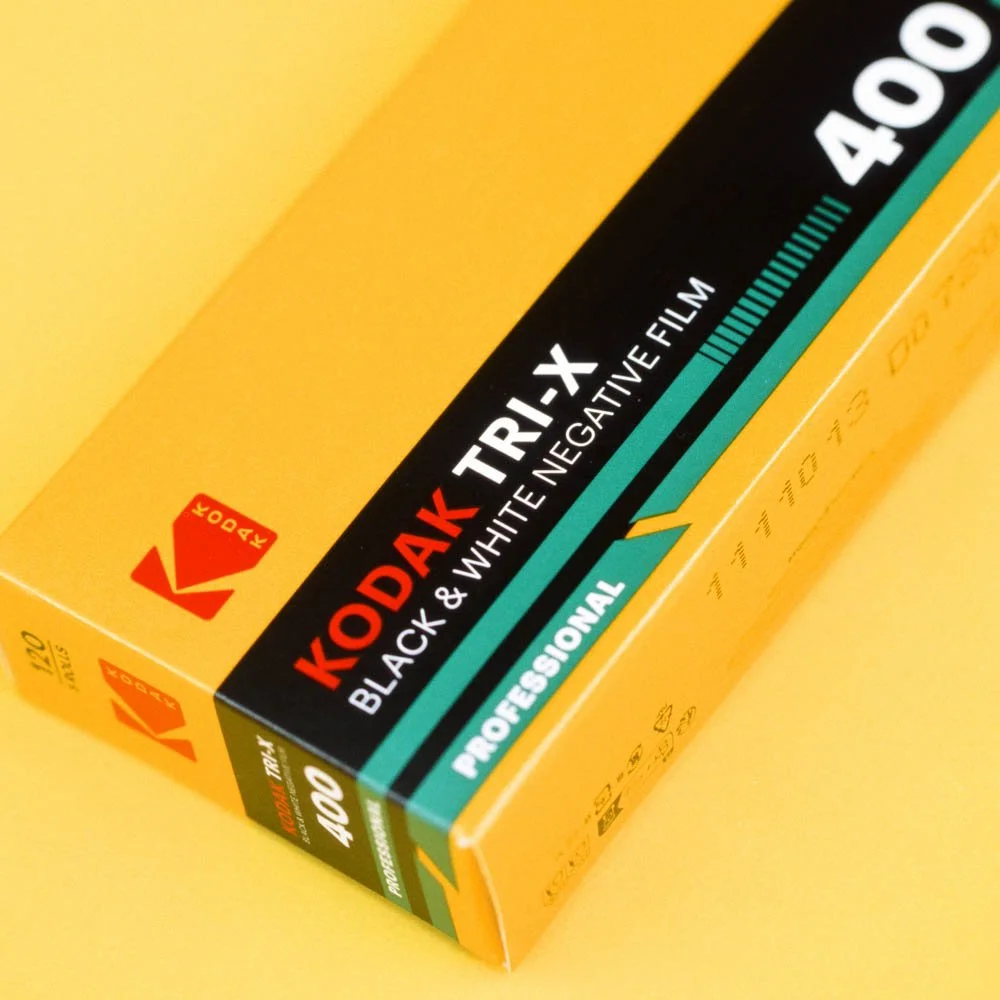
How does HP5 Plus 120 compare to Kodak Tri-X 400 120?
The classic comparison, and it applies equally in 120 as in 35mm. HP5 is smoother and more neutral, with better exposure latitude and a cleaner, more modern aesthetic. Tri-X is grittier and more contrasty with a rawer, more expressive character. In 120 the differences are in some ways more pronounced — the larger negative amplifies the character of both films, making HP5's smoothness more apparent and Tri-X's grain more richly textured. Both are exceptional; the choice is aesthetic.
How far can I push HP5 Plus 120?
HP5 pushes reliably to ISO 800 (one stop), 1600 (two stops), and 3200 (three stops). In 120 the results at each push speed are noticeably better than in 35mm — the larger negative area means finer apparent grain and more tonal depth even at pushed speeds. At 1600 in 120 the results are genuinely excellent for documentary and available-light portrait work. Always note your rated ISO on your processing order.
How does HP5 Plus 120 compare to Kodak TMAX 400 120?
HP5 has a traditional grain character — warmer, more organic, with a look that many photographers find more emotionally engaging. TMAX 400 uses T-GRAIN technology for a finer, smoother grain structure with higher sharpness and better push performance. TMAX is the more technically precise film; HP5 has more personality. In 120 both are outstanding — the choice comes down to whether you prefer technical precision or traditional character.
Is the 120 version the same emulsion as the 35mm version?
Yes — the same emulsion on 120 backing paper. The difference is purely the negative size, which delivers more detail, finer apparent grain, greater tonal depth, and better performance at the scanning and printing stage. If you have a medium format camera, the 120 version is meaningfully superior.