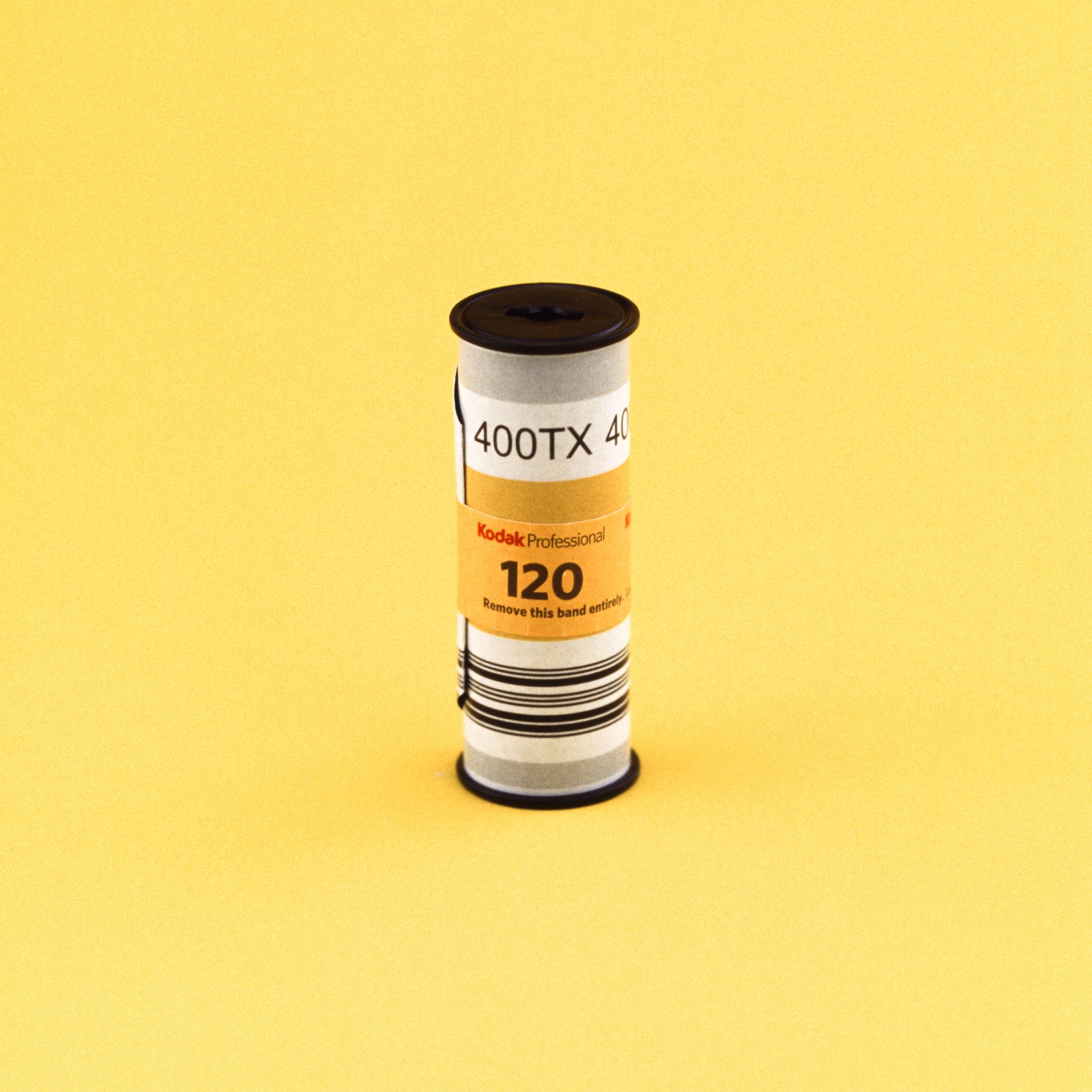
Ilford Delta 3200 - 120 Film


Ilford Delta 3200 - 120 Film
Ilford Delta 3200 – 120 format panchromatic black and white negative film
Nominal sensitivity EI 3200 — true native speed approximately EI 1000, optimised for standard development at 3200
Core-shell crystal Delta technology — finest grain structure available at this speed
Exceptionally wide exposure latitude — usable from EI 400 to EI 6400
Rich tonality with unobtrusive grain for an ultra-high speed film
The only ultra-high speed precision black and white film available in 120 format
Best for: available-light portraiture, concerts, theatre, documentary, and any low-light medium format work
Ilford Delta 3200 120 Film
Delta 3200 in 120 format occupies a category of one. There is no other ultra-high speed precision black and white film available in 120 — this is it. If you shoot medium format and you need to work in genuinely difficult light without sacrificing the quality and tonal depth that a 120 negative provides, Delta 3200 is the only answer.
One thing worth understanding before you load it: Delta 3200's name refers to its recommended exposure index, not its native sensitivity. The film's true native speed is approximately EI 1000. When you rate it at EI 3200 and develop normally, you're effectively pushing it about 1.5 stops — and Ilford has engineered the emulsion and development specifications precisely around this. Rate it at 3200, process normally, and the results are exactly what Delta 3200 is designed to deliver.
Why photographers love Ilford Delta 3200 in 120
The combination of ultra-high speed and medium format negative quality is genuinely extraordinary. In 35mm, Delta 3200 produces grain that's visible but controlled and characterful. In 120, that same emulsion across a larger negative area produces results that are measurably finer — the grain becomes an aesthetic element rather than a technical concession, and the tonal depth of the larger negative adds a richness to shadow and highlight detail that 35mm simply cannot match at this speed.
For available-light portrait photographers working in medium format, Delta 3200 in 120 is transformative. A Hasselblad 500 or Mamiya RB67 loaded with Delta 3200, fitted with a fast 80mm or 90mm lens, can produce images in candlelit rooms, dim studios, and theatre environments that are simply not achievable any other way. The grain in those portraits — present, organic, and entirely appropriate — has a quality that many photographers actively seek out rather than try to eliminate.
The wide exposure latitude adds practical flexibility. Rate it at EI 1600 for slightly finer grain in marginally better light. Rate it at EI 6400 when you need every last stop and are prepared to accept more contrast. The film handles the full range with a consistency that reflects its Delta series engineering heritage — this is a precision film designed by Ilford to perform reliably at extreme speeds, not just a fast film that happens to work at high ISOs.
Camera pairings: Hasselblad 500 series, Mamiya RB67, Mamiya 645, Bronica ETRS, Pentax 67 — any medium format system benefits, but the combination of a fast standard lens and Delta 3200 in 120 is particularly compelling. The Hasselblad 80mm f/2.8 Planar and Mamiya 80mm f/1.9 are natural partners.
A bit of film history
Delta 3200 was introduced by Ilford in 1998 as part of the Delta professional series. The Delta range used Ilford's core-shell crystal technology to achieve finer grain at high speeds than conventional silver halide emulsions — the same approach Kodak took with their T-GRAIN technology. Delta 3200 was and remains the fastest film in the Delta range, and following Kodak's discontinuation of TMAX 3200, it became the only ultra-high-speed precision B&W film still in production in any format. The 120 version is the rarest format of an already specialist film, making it genuinely difficult to keep in stock.
Processing
Ilford Delta 3200 requires standard black and white negative processing, developed to the specifications for the exposure index you rated the film at. Ilford DD-X and Microphen are the recommended developers for high-speed Delta work — both support pushing effectively and produce the best combination of shadow detail and grain control. ID-11 is a reliable all-rounder. Always note your rated EI on your processing order so development time can be adjusted accordingly. We process black and white in-house at Ikigai Film Lab in Melbourne, with scanning available on our Fujifilm Frontier and Noritsu HS-1800 scanners. Delta 3200 in 120 scans with considerably more detail than the 35mm version — the larger negative makes a real difference at this speed.
Common questions
Is Delta 3200 really ISO 3200?
The film's nominal sensitivity is rated at EI 3200 for standard development, but its true native speed is approximately EI 1000. Rating it at 3200 and developing normally constitutes a mild push that Ilford has specifically designed the emulsion and development specifications around. Rate it at 3200, develop normally, and you'll get exactly what Delta 3200 is designed to deliver. Always note your rated EI on your processing order. There’s no need to pay for pushing on this film when shooting at 3200.
Why shoot Delta 3200 in 120 rather than 35mm?
The larger 120 negative produces noticeably finer apparent grain, greater tonal depth, and more detail at equivalent speeds. If you're prepared to work with a medium format camera, the 120 version is meaningfully better — not just marginally. For serious available-light portrait and documentary work, the quality difference at this speed is significant enough to justify the camera size. Delta 3200 in 120 is one of the most specialised and capable combinations in all of film photography.
What EI can I rate Delta 3200 at?
Ilford specifies it as usable from EI 400 to EI 6400. At EI 400 you get finer grain and more compressed contrast — some photographers use it this way deliberately. At EI 1600 it sits slightly under the nominal rating with slightly finer grain. At EI 3200 you get the standard results. At EI 6400 contrast and grain increase noticeably but results remain usable and can be very effective for extreme low-light work.
How does Delta 3200 120 compare to pushing HP5 Plus 120 to 3200?
Delta 3200 at its nominal rating is specifically engineered for this speed range — the grain is more controlled, the tonality is richer, and shadow and highlight retention is better than pushing HP5 three stops achieves. Pushing HP5 to 3200 significantly increases contrast and grain while compressing shadow detail. For regular ultra-high-speed work, Delta 3200 is the superior technical choice. Pushed HP5 has its own distinct aesthetic that some photographers prefer specifically for that reason.
Is Delta 3200 120 hard to find?
Yes — it's one of the more difficult films to keep in consistent supply. The 120 format is a small part of Ilford's Delta 3200 production, and global demand from medium format photographers keeps it scarce. When we have stock, we'd encourage you not to wait if you need it.