Fujifilm Acros 100 II - 35mm - 36 exp
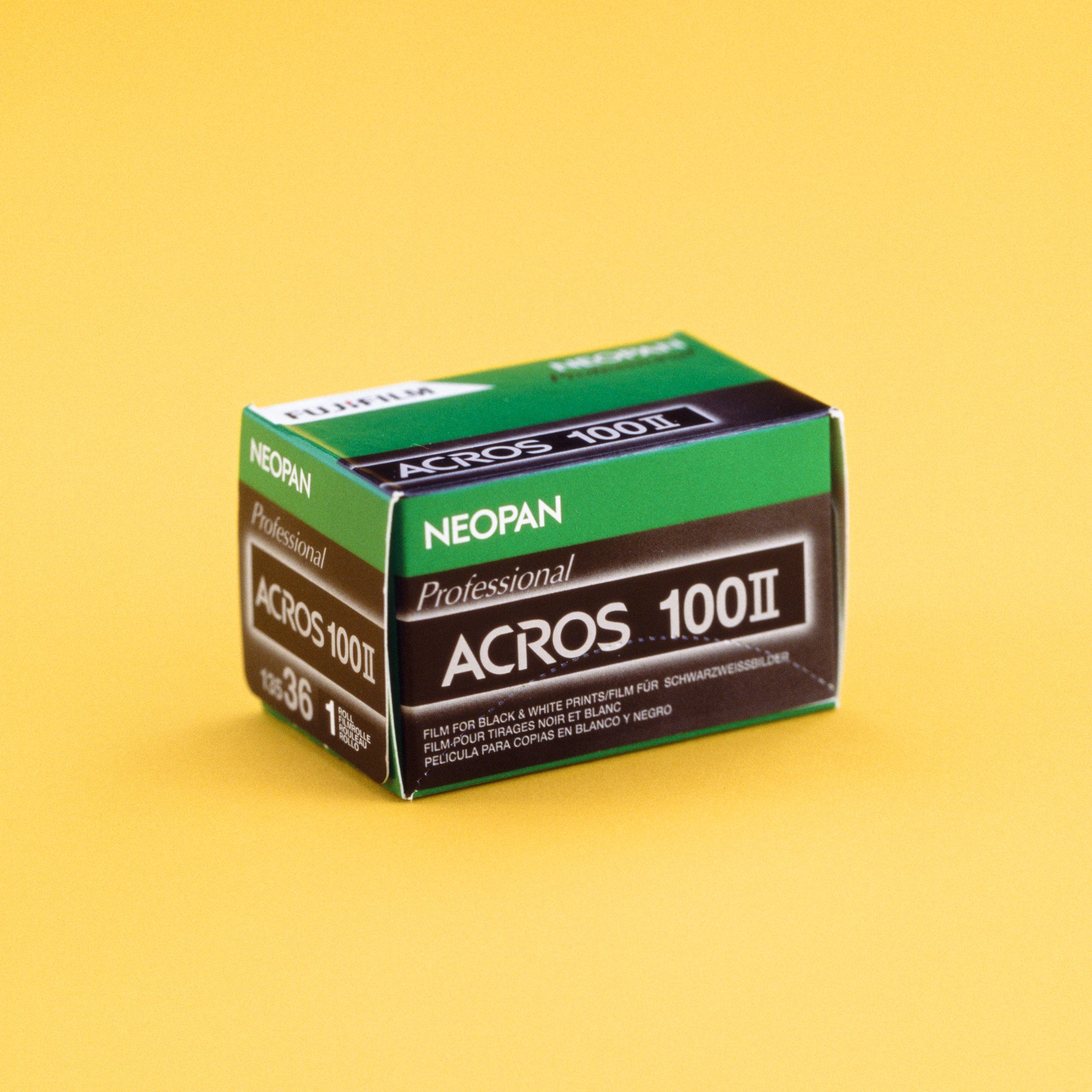
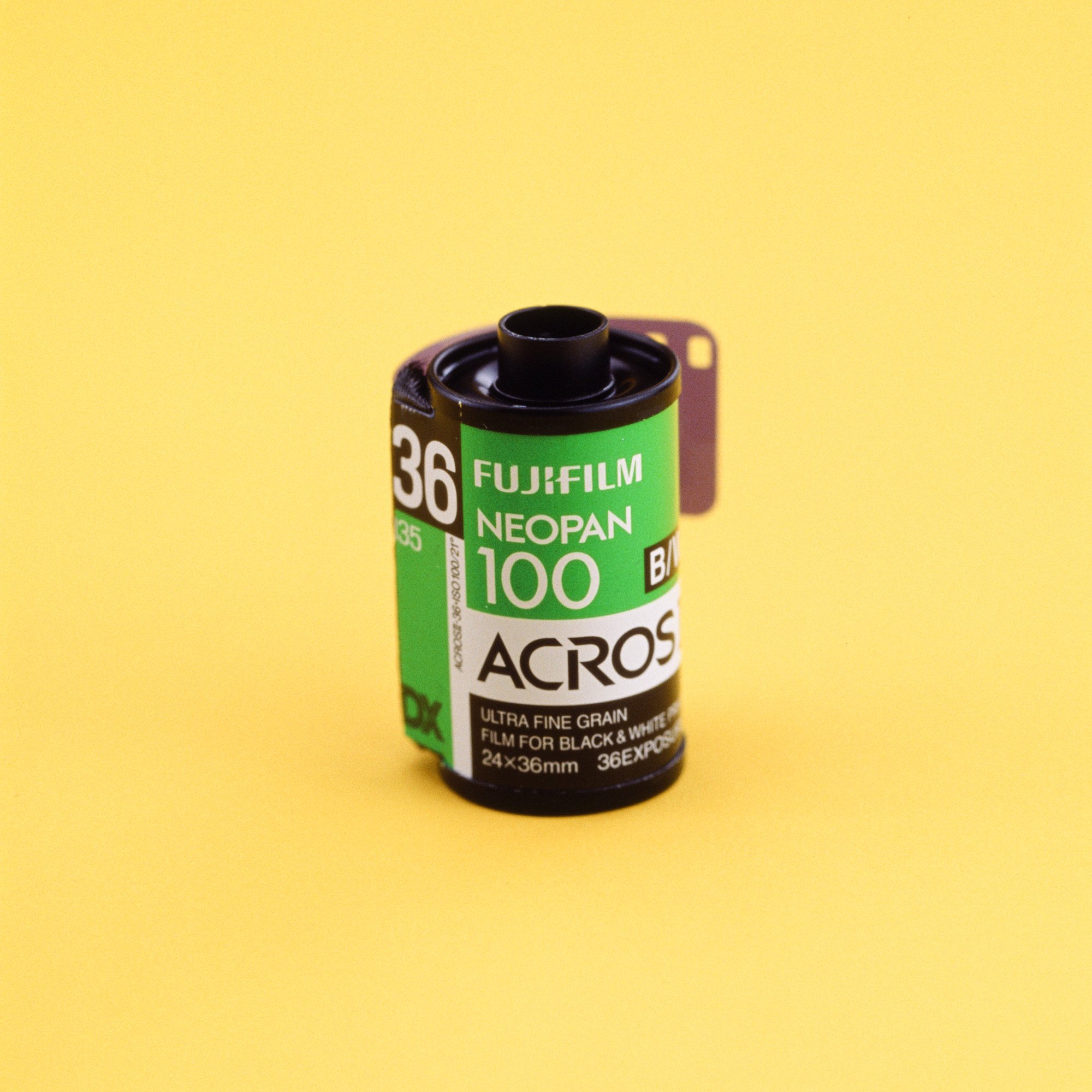
Fujifilm Acros 100 II - 35mm - 36 exp
Fujifilm Acros 100 II – 35mm orthopanchromatic black and white negative film, 36 exposures
ISO 100 standard black and white development
Super fine grain — among the finest of any ISO 100 B&W film in production
Deep, contrasty blacks with beautiful tonality and high sharpness
Outstanding reciprocity characteristics — exceptional for long exposures
Orthopanchromatic rendering — slightly reduced red sensitivity for richer greens and darker skies
Develop in Microfine or Rodinal to see what it can really do
Best for: landscapes, architecture, long exposures, fine art, and any shooting where grain and tonal quality are the priority
Fujifilm Acros 100 II 35mm Film
We'll be direct: Acros 100 is one of our favourite black and white films. It has beautiful deep contrasty blacks, extremely fine grain that holds up even in 35mm at large print and scan sizes, and a tonal quality that's genuinely different from anything else in the B&W market. When Fujifilm discontinued the original Acros in 2018, it was a significant loss. When they brought it back as Acros 100 II in 2019 with an improved emulsion, it felt like a genuine gift to the analogue community.
This is the film you put in your camera when you're serious. When the light is right, you have a tripod, and you want the best possible black and white negative your 35mm camera can produce.
Why photographers love Fujifilm Acros 100 II
Acros has three qualities that make it exceptional, and they work together:
The grain is extraordinary. At ISO 100 the silver halide structure is so fine that in a well-exposed 35mm negative scanned at high resolution, it can be genuinely difficult to see. The orthopanchromatic emulsion — which has slightly reduced red sensitivity compared to standard panchromatic films — adds a quality to the tonal rendering that's particularly beautiful in landscapes: greens become richer and more differentiated, skies darken slightly without a filter, and foliage takes on a depth and texture that conventional B&W films rarely achieve.
The reciprocity characteristics are genuinely special. Most films suffer significant reciprocity failure in long exposures — you meter for 30 seconds and need to expose for several minutes to compensate. Acros has industry-leading reciprocity performance, requiring minimal compensation even at exposures of several minutes. For photographers who work with a tripod shooting waterfalls, cityscapes at night, architectural interiors, or any long-exposure subject, this is a massive practical advantage.
The contrast and tonal rendering are where it all comes together. Acros produces deep, rich blacks that don't feel blocked up, and clean bright highlights that hold texture well. The midtones are beautifully graduated. It's a film that rewards careful exposure and a good developer — and Microfine is our recommendation. Shot at ISO 100, developed in Microfine, the results are some of the finest B&W negatives a 35mm camera can produce.
Camera pairings: Leica M cameras, Nikon F3, Canon F-1, Contax RTS, Olympus OM-4 — any camera where you control exposure carefully and have time to be deliberate. Acros rewards patience.
A bit of film history
The original Fujifilm Acros 100 (Neopan Acros 100) was introduced in 2002 and quickly became regarded as one of the finest black and white films ever made. Fujifilm discontinued it in 2018, citing the complexity of manufacturing alongside reduced demand — a decision that prompted genuine grief in the film photography community. The response was significant enough that Fujifilm relaunched the film in 2019 as Acros 100 II, with an updated emulsion that retained the original's best qualities while improving reciprocity performance further. That a major manufacturer reversed a discontinuation decision in response to community demand is remarkable and says something real about what this film means to the people who shoot it.
Processing
Fujifilm Acros 100 II requires standard black and white negative processing. We process B&W in-house at Ikigai Film Lab in Melbourne, with scanning available on our Fujifilm Frontier and Noritsu HS-1800 scanners. Developer choice makes a real difference with Acros — Fujifilm Microfine brings out the finest grain and smoothest tonal gradation. Rodinal at high dilution produces a slightly more acutance-forward result with enhanced edge sharpness. D-76 and ID-11 are reliable all-rounders. Standard development times apply; no adjustments needed at box speed.
Common questions
What makes Acros 100 II different from other ISO 100 B&W films?
The combination of orthopanchromatic rendering, ultra-fine grain, and exceptional reciprocity characteristics is unique. Kodak TMAX 100 and Ilford Delta 100 are the closest technical comparisons, but Acros has a distinct tonal quality — particularly in how it renders greens and skies — that both photographers and printers find compelling. The reciprocity performance in long exposures is genuinely better than any competitor.
What is orthopanchromatic, and why does it matter?
Standard panchromatic films are sensitive to all visible wavelengths including red. Orthopanchromatic films have slightly reduced red sensitivity, which means reds render slightly darker and greens render slightly richer and more differentiated. In landscape photography this translates to skies that naturally darken a little (similar to a very mild yellow filter effect), foliage with more depth and texture, and overall tonal rendering that many photographers find more classical and pleasing. It's subtle but distinctive.
Why is Acros good for long exposures?
Most films suffer reciprocity failure — when exposure times extend beyond a few seconds, the film's sensitivity effectively drops and you need to add exposure to compensate, sometimes significantly. Acros 100 II has outstanding reciprocity characteristics, requiring minimal compensation even at very long exposures. This makes it far more practical for tripod work, especially for exposures of 30 seconds or longer where other films might require doubling or tripling the calculated exposure time.
What developer should I use with Acros 100 II?
Fujifilm Microfine is our top recommendation — it brings out the finest grain and smoothest tonal gradation that Acros is capable of. Rodinal at 1+50 or 1+100 dilution produces excellent sharpness with slightly more visible grain, which some photographers prefer. D-76 at 1+1 is a reliable standard that gives good all-round results. Avoid high-energy developers like HC-110 at concentrated dilutions — they can push contrast too far for the film's natural rendering.
How does Acros 100 II compare to Kodak TMAX 100?
Both are exceptional ISO 100 B&W films with very fine grain and high sharpness. TMAX 100 uses Kodak's T-GRAIN emulsion for a smooth, almost digital grain quality and a neutral tonal curve. Acros has a more traditional grain structure with the orthopanchromatic tonal rendering that gives it its distinctive landscape character. TMAX 100 is more technically precise and neutral; Acros has more personality. Many photographers who work in black and white seriously own both and choose based on the subject.