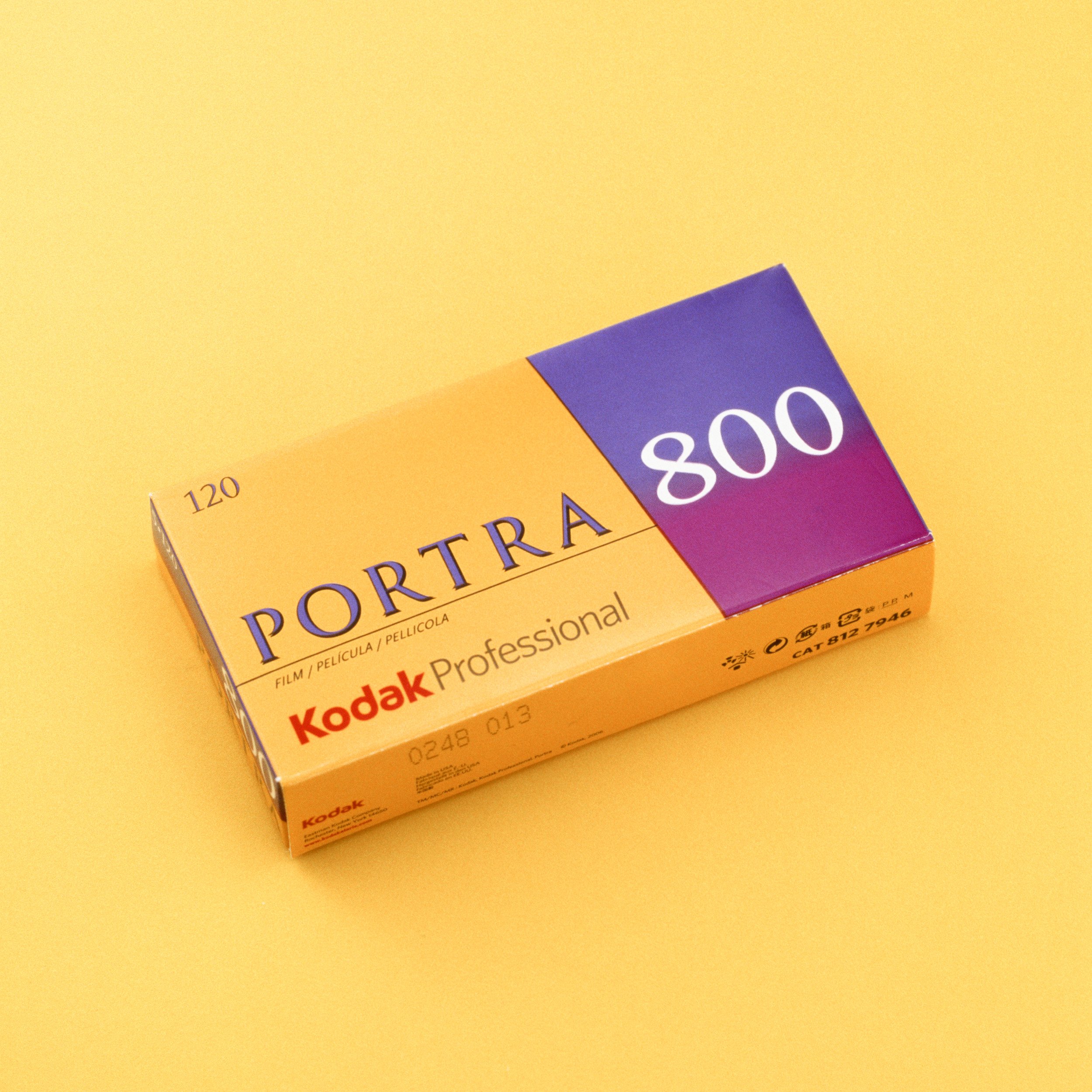
Kodak Portra 800 - 120 Film (Ektacolor Pro 800)
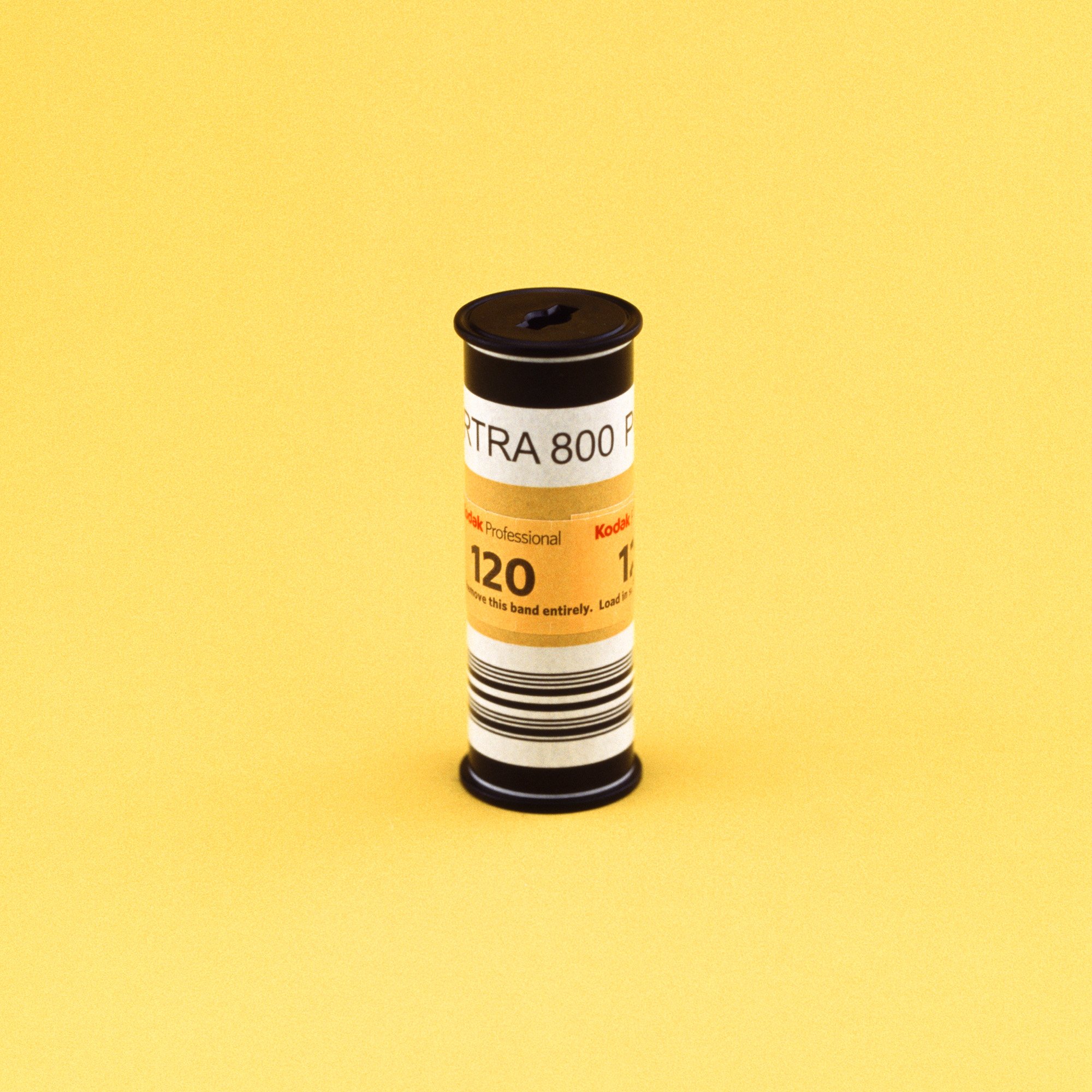
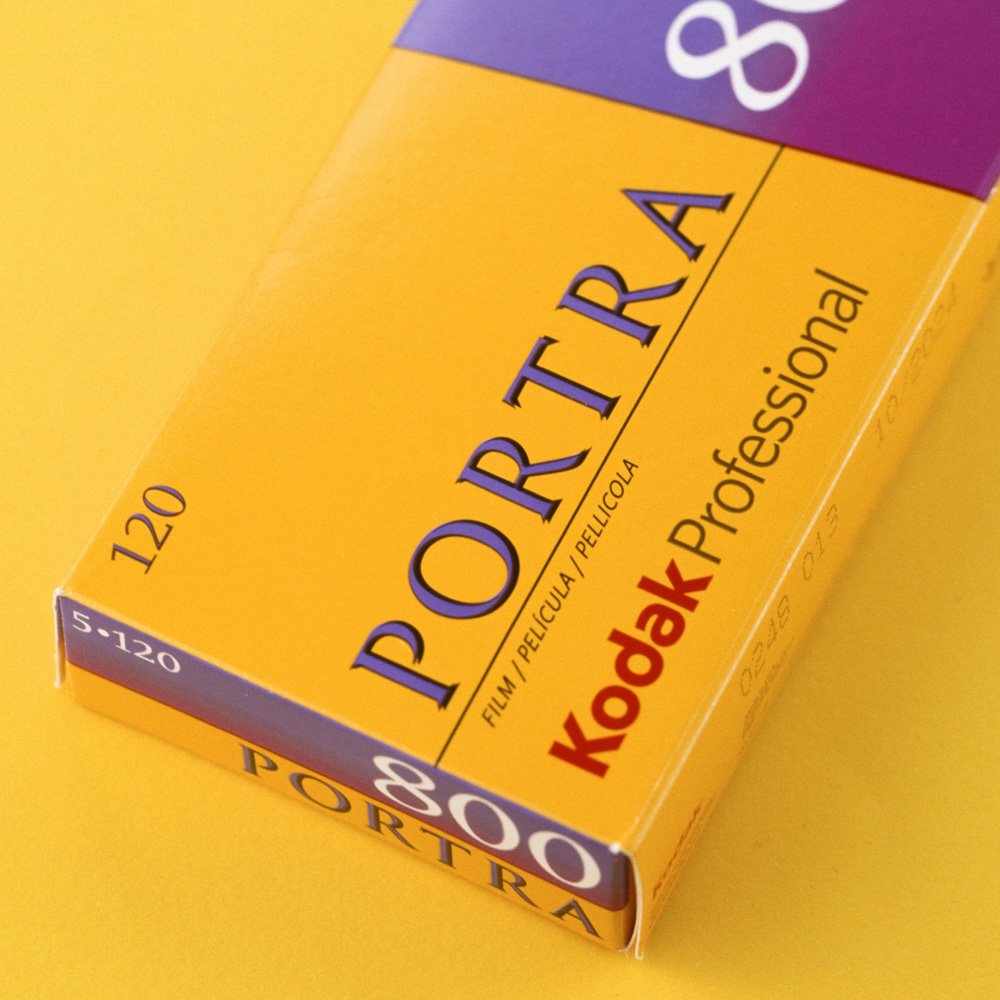
Kodak Portra 800 - 120 Film (Ektacolor Pro 800)
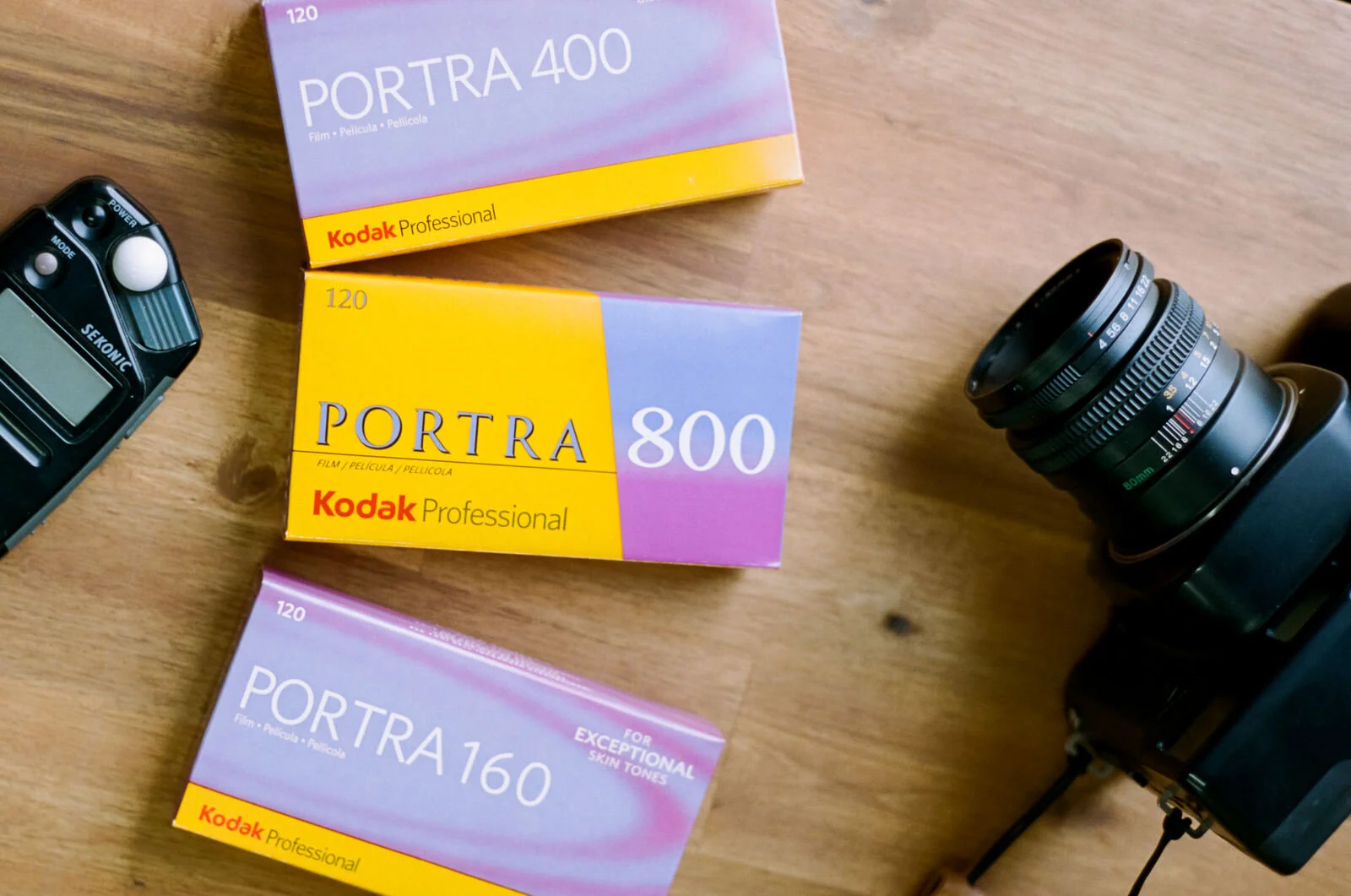
Kodak Portra 800/Ektacolor Pro 800 – 120 format colour negative film
ISO 800 daylight-balanced C-41 process
T-GRAIN emulsion — finest grain structure available at ISO 800
Vivid colour saturation with low contrast and accurate neutral skin tones
Exceptional underexposure latitude — pushes cleanly to ISO 1600
Wide exposure latitude with extended highlight and shadow detail
Optimised for scanning and enlargement
Best for: weddings, events, low-light portraits, indoor shooting, and fast-moving subjects
Kodak Portra 800 120 Film (Ektacolor Pro 800)
Kodak Portra 800 is the fastest professional colour negative film in production, and in 120 format it's one of the most capable and versatile tools a medium format photographer can have. When the light drops, when subjects move, when you need to shoot without a flash in a dimly lit venue — Portra 800 is what you reach for. It delivers the neutral accuracy, beautiful skin tone rendering, and forgiving latitude that define the entire Portra line, at a speed that opens up situations where slower films simply can't operate.
FAQ
Is Ektacolor Pro 800 the same as Portra 800?
Yes. Kodak Ektacolor Pro 800 and Portra 800 are the same professional ISO 800 colour negative film stock. Same emulsion, same look, different packaging/name.
Why is Kodak using the Ektacolor name?
Kodak has reintroduced the Ektacolor branding in some markets and commercial channels. The film itself remains the same stock photographers know as Portra 800.
Is Ektacolor Pro 800 a new film?
No. Ektacolor Pro 800 is not a new emulsion or a different colour negative film stock. It is Kodak professional ISO 800 colour negative film, equivalent to Portra 800.
Why photographers love Kodak Portra 800 in 120
Portra 800 has all the qualities that make the Portra family the professional standard for portrait and wedding photography — neutral, accurate colour, skin tones that are consistently flattering, low contrast that retains detail in both highlights and shadows — but with three stops more speed than Portra 160 and two stops more than Portra 400. That speed changes what's possible.
In 120, the T-GRAIN emulsion keeps grain remarkably controlled for an ISO 800 film. It's visible, but it's pleasant — smooth and organic in a way that suits the natural, unposed style of documentary wedding photography and available-light portraiture. The larger negative area of medium format means Portra 800 in 120 scans with considerably more detail and less apparent grain than the same emulsion in 35mm, making it an excellent choice when you want the extra speed without sacrificing image quality.
One of Portra 800's best-kept secrets is how well it handles overexposure. Many experienced photographers rate it at ISO 400 or even ISO 200 in good light, deliberately overexposing by one to two stops. The results are softer grain, lifted luminous shadows, and skin tones with an almost ethereal quality. It's a technique that takes advantage of Portra 800's extraordinary latitude and produces a look that's become synonymous with a certain style of romantic, light-drenched film photography.
Camera pairings: Hasselblad 500 series, Mamiya RB67, Mamiya 645, Pentax 67, and Bronica ETRS all suit it well. For available-light wedding and event photographers working in medium format, Portra 800 in 120 is often the only film they trust when the ceremony moves inside.
A bit of film history
Portra 800 was introduced by Kodak in 1998 as part of the original Portra launch alongside Portra 160 NC, 160 VC, and 400 NC/VC. It was reformulated in 2010 alongside the rest of the Portra line into the current single-emulsion versions — dropping the NC/VC distinction in favour of a unified emulsion that combined the best qualities of both. The current Portra 800 emulsion is a significant improvement on earlier versions, with finer grain, better colour accuracy, and improved scanning performance.
Processing
Kodak Portra 800 requires standard C-41 colour negative processing. We process C-41 in-house at Ikigai Film Lab in Melbourne, with scanning available on our Fujifilm Frontier and Noritsu HS-1800 scanners. If you're pushing to ISO 1600, note your rated ISO on your processing order so we can adjust development time accordingly.
Common questions
How does Portra 800 120 compare to Portra 400 120?
They share the same Portra DNA — neutral colour, accurate skin tones, wide latitude — but Portra 800 gives you an extra stop of speed and a somewhat more open, lower-contrast rendering that can be very flattering in available light. Grain is more visible in Portra 800, though the T-GRAIN emulsion keeps it controlled and pleasant. If you're shooting in good light, Portra 400 is the cleaner option. If you're shooting in mixed or low light and need the speed, Portra 800 is the right choice.
Can I push Portra 800 to ISO 1600?
Yes — pushing one stop to ISO 1600 is well-supported and one of the most common ways to use this film. Contrast and grain increase modestly but the results remain professional quality with good shadow detail and accurate colour. Always tell your lab the ISO you rated the film at. Some photographers push Portra 800 two stops to ISO 3200 in extreme situations — results become grainier and more contrasty, but can work well for moody, documentary-style shooting.
Is Portra 800 good for wedding photography in 120?
It's one of the best films for exactly this use. The combination of ISO 800 speed, wide latitude, accurate skin tone rendering, and the quality of the 120 negative makes it a trusted choice for film wedding photographers working in medium format. It handles the transition from outdoor ceremony to indoor reception without needing to change films, and the low contrast rendering is very flattering under mixed artificial lighting.
Should I rate Portra 800 at box speed?
You don't have to — and many photographers don't. Rating Portra 800 at ISO 400 or ISO 200 (one to two stops of deliberate overexposure) is a well-known technique that produces softer grain, more luminous shadows, and particularly beautiful skin tones. The film's wide latitude handles it beautifully. If you're shooting in good light and want that dreamy, glowing quality associated with overexposed Portra, try rating it at 400 and see what it gives you. At box speed it's a workhorse; overexposed, it becomes something a little more special.
This item is one roll of 120 format roll film.