Kentmere 400 - 120 Film
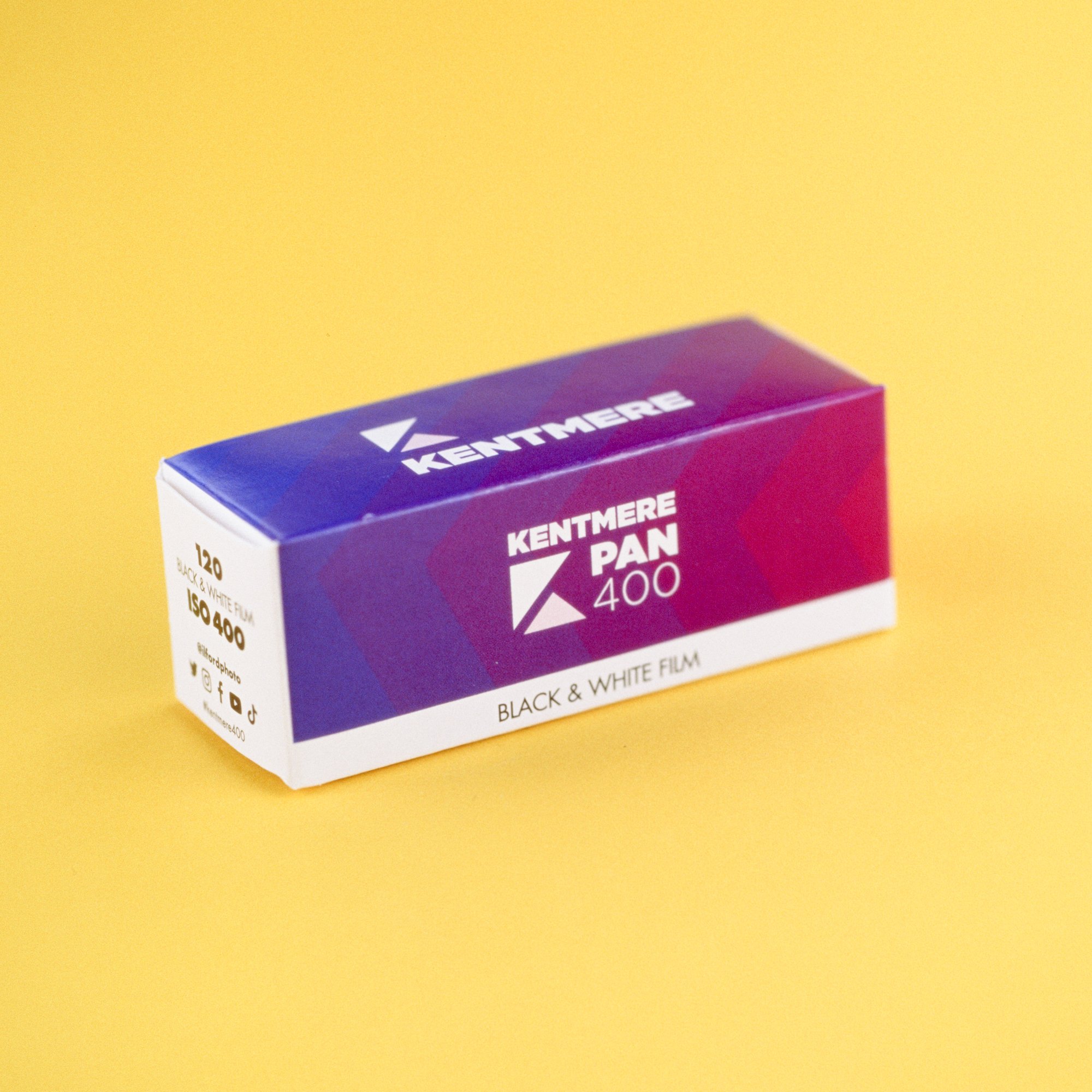
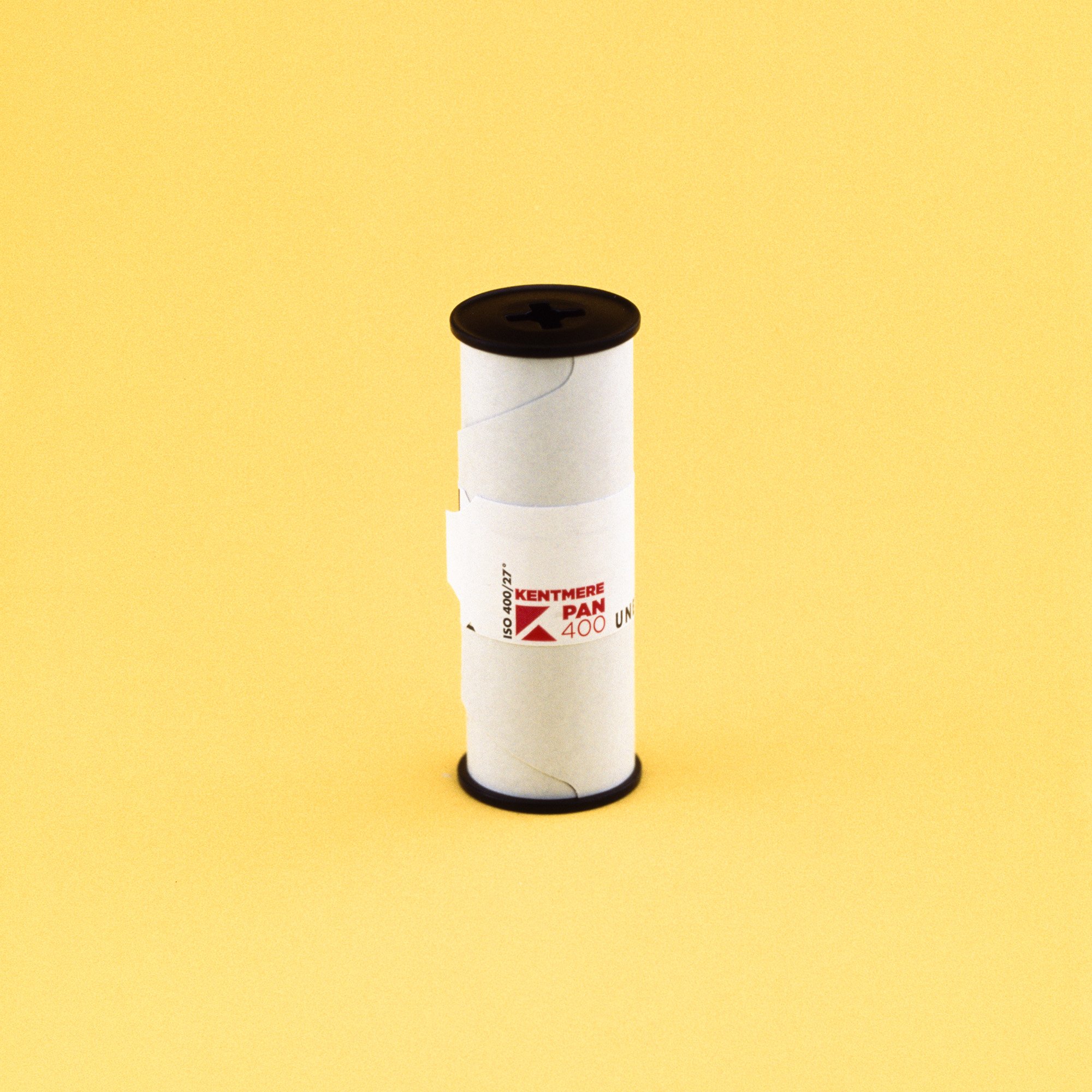
Kentmere 400 - 120 Film
Kentmere 400 – 120 format panchromatic black and white negative film
ISO 400 standard black and white development
Wide exposure latitude with medium contrast
Pushes to 800 and 1600
Made by Ilford at Mobberley, Cheshire, England
Most affordable 120 black and white film on the market
Best for: general medium format B&W shooting, street, documentary, portrait, and anyone starting out with 120
Kentmere 400 120 Film
Kentmere 400 in 120 is the most affordable black and white film you can put through a medium format camera — and it's made by Ilford. That combination of provenance and price is genuinely hard to beat. The Kentmere range is manufactured at Ilford's Mobberley facility in Cheshire, England, the same site responsible for HP5 Plus, Delta 3200, and some of the most respected black and white emulsions ever made. Kentmere uses a different emulsion formulation, priced for accessibility rather than technical peak performance — but in 120 format, the larger negative does a significant amount of work on its behalf.
What is a visibly grainy, high-contrast film in 35mm becomes considerably more refined in 120. The grain structure that can feel coarse in a 35mm frame has room to settle across a 6×6 or 6×7 negative, and the tonal rendering — Kentmere's characteristic high contrast and broad tonal range — translates well to medium format subjects: street photography, documentary portraiture, landscape work, architecture. The images have a direct, punchy quality that suits the aesthetic of many photographers who choose black and white for its graphic impact.
At $11 a roll, Kentmere 400 in 120 makes medium format black and white photography accessible in a way that HP5 Plus or TMAX 400 at higher price points can't. For students, photographers exploring medium format for the first time, or anyone who wants to shoot more and spend less, it's the obvious entry point.
Camera pairings: Mamiya C330, Hasselblad 500 series, Yashica-Mat, Bronica ETRS, Holga 120, Pentax 67, Rolleiflex — Kentmere 400 suits any medium format system, and it's a particularly good match for cameras that have their own character and don't demand the most technically refined emulsion to produce interesting results.
Why photographers love Kentmere 400 in 120
The price is the first reason, and it's a legitimate one. Medium format photography already carries a cost premium — cameras, lenses, processing, scanning — and a film that costs significantly less than its peers without being a compromise in the hands of a competent photographer has real value. Kentmere 400 in 120 lets you shoot more, experiment more, and use your medium format camera more regularly without calculating the cost of every frame.
The character is the second reason. Kentmere 400 has a high-contrast, expressive look that some photographers actively prefer over the smoother, more neutral rendering of HP5 or the technical precision of TMAX 400. Shadows are deep, highlights hold, and the tonal curve has a directness that makes images feel bold and graphic. In 120 format this character is refined by the larger negative without being eliminated — you get the Kentmere look with better grain control and more tonal depth than the 35mm version delivers.
Push processing extends the film's usefulness. Kentmere 400 pushes reasonably to ISO 800, and in 120 the results are workable — grain increases noticeably but remains manageable on the larger negative. For available-light interior shooting or late afternoon work where you need another stop, pushing to 800 is a practical option.
A bit of film history
Kentmere is a brand with roots in Cumbria, England — the name references Kentmere, a valley in the Lake District where photographic paper manufacturing has a long history. The brand was acquired by Harman Technology (Ilford) and production consolidated at the Mobberley facility in Cheshire, where Ilford's full range of black and white films and papers is manufactured today. Kentmere sits at the accessible end of Harman's product range, offering Ilford's manufacturing quality and consistency at a price point that makes film photography available to more people — a genuinely important role in the current analogue market.
Processing
Kentmere 400 120 requires standard black and white negative processing. We process B&W in-house at Ikigai Film Lab in Melbourne, with scanning available on our Fujifilm Frontier and Noritsu HS-1800 scanners. If you're pushing Kentmere to 800, note your rated ISO on your order so we can adjust development time. The 120 negative scans with noticeably more tonal depth than the 35mm version — the larger format makes a real difference at the scanning stage.
Common questions
Is Kentmere 400 really made by Ilford?
Yes — Kentmere is a brand owned by Harman Technology, the company behind Ilford Photo, and is manufactured at the Ilford facility in Mobberley, Cheshire. The emulsion is different from HP5 Plus or Delta 400 — it's formulated for the lower price point — but the manufacturing provenance and quality control are Ilford's. It's a genuine Ilford-made product.
How does Kentmere 400 120 compare to HP5 Plus 120?
HP5 Plus has smoother, more neutral grain, better exposure latitude, and more refined tonal rendering — it's the more capable film by every technical measure. Kentmere 400 is higher contrast, grainier, and less forgiving of exposure error. The gap between them in 120 is smaller than in 35mm because the larger negative cushions Kentmere's limitations, but HP5 Plus is the better film. Kentmere's advantage is price — it costs meaningfully less per roll, which matters if you're shooting medium format regularly.
How does Kentmere 400 120 compare to Kodak TMAX 400 120?
TMAX 400 uses T-GRAIN technology for the finest grain structure of any ISO 400 B&W film — it's sharper, more precise, and more technically demanding than Kentmere 400. Kentmere has more contrast and character but less technical refinement. TMAX 400 is the better film; Kentmere is considerably cheaper. If technical quality is the priority, choose TMAX. If you're shooting for enjoyment, experimentation, or volume, Kentmere 400 in 120 offers outstanding value.
How far can I push Kentmere 400 120?
Kentmere 400 pushes to ISO 800 with acceptable results in 120 — grain increases but the larger negative helps. Pushing to 1600 is possible but results are coarser and contrast increases significantly; it's best treated as an emergency measure rather than a regular practice. For reliable push performance to 1600 and beyond, HP5 Plus 120 is a better choice. Always note your rated ISO on your processing order.
Is Kentmere 400 120 the same emulsion as the 35mm version?
Yes — the same emulsion on 120 backing paper. The difference is the negative size, which delivers finer apparent grain, more tonal depth, and better overall results. In Kentmere 400, where the 35mm version can feel coarse in difficult conditions, the 120 version is noticeably more refined. It's the same film, significantly improved by the format.