Fujifilm Velvia 100 - 35mm - 36 exp
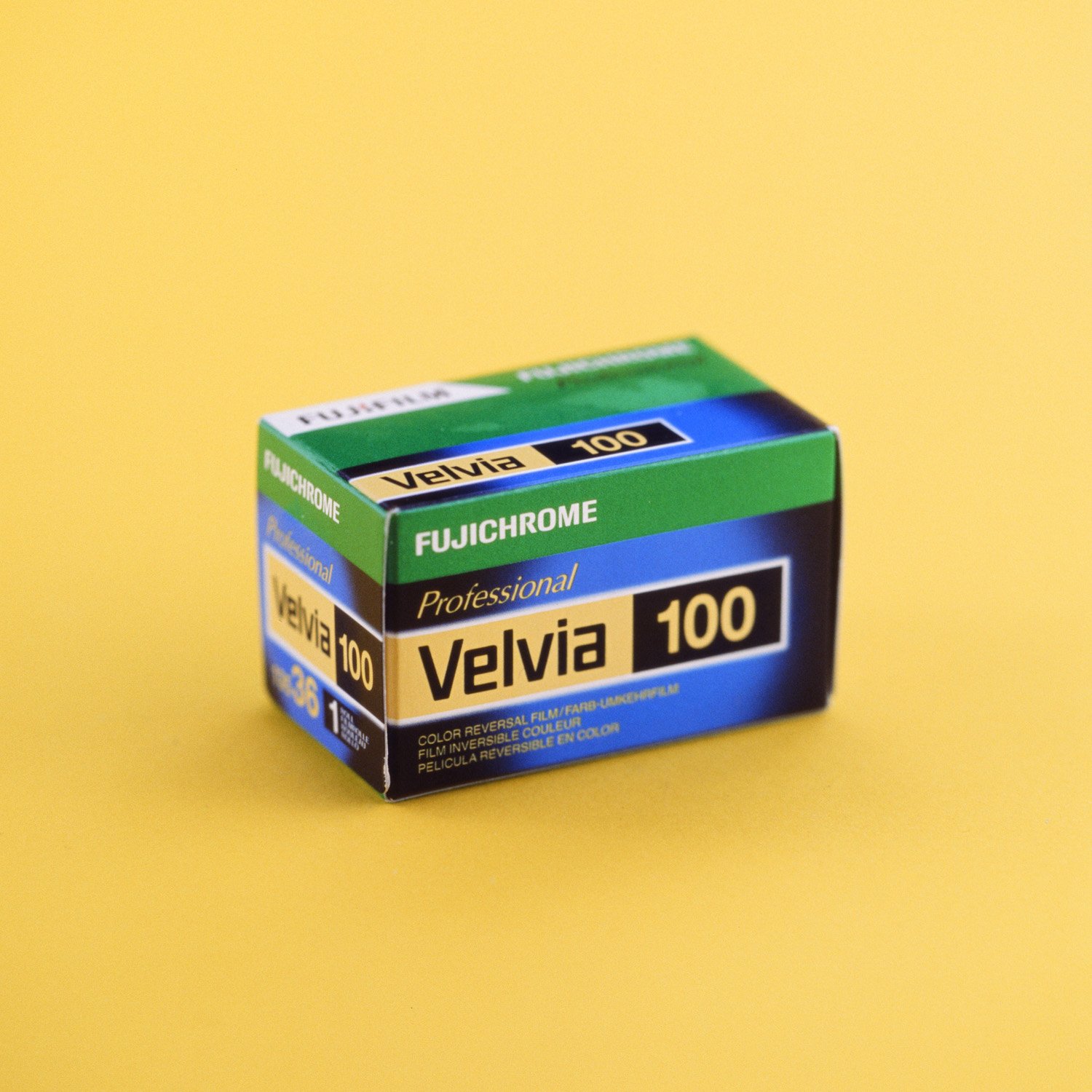
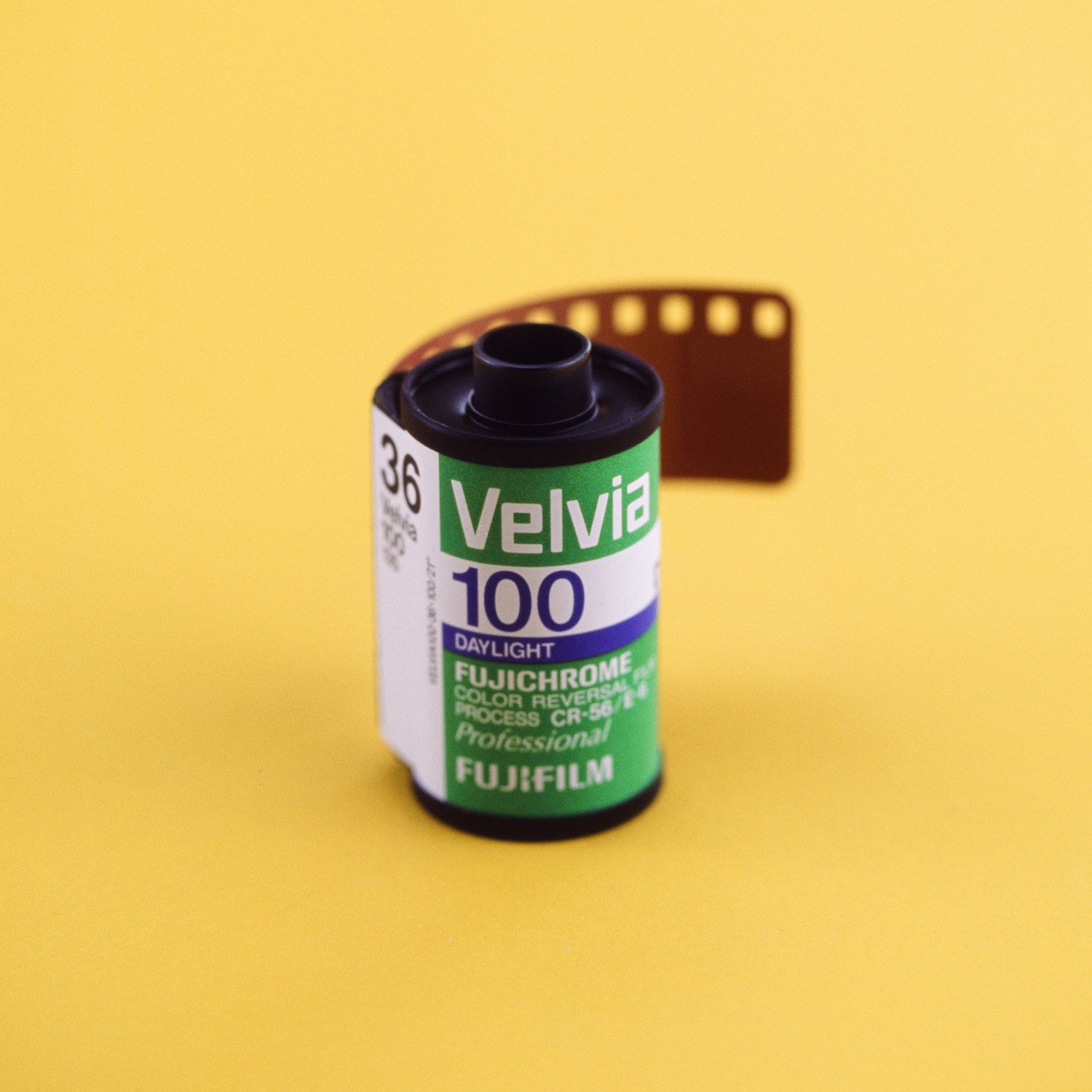
Fujifilm Velvia 100 - 35mm - 36 exp
Fujifilm Velvia 100 (RVP 100) – 35mm colour transparency / slide film, 36 exposures
ISO 100 daylight-balanced, E-6 process
Exceptionally high colour saturation with super-fine grain
New-generation cyan, magenta, and yellow couplers
Push +1 / pull -0.5 stops with minimal colour shift
High colour image storage permanence
E-6 slide film — we process E-6 in-house at Ikigai Film Lab
Best for: landscape, nature, travel, architecture, and any shooting where vivid colour and fine grain are the priority
Fujifilm Velvia 100 35mm Film
Velvia 100 is the more accessible member of Fujifilm's legendary Velvia family — a stop faster than Velvia 50, with slightly more forgiving exposure latitude and meaningfully better push/pull flexibility, while retaining the vivid, saturated colour signature that made Velvia one of the most distinctive slide films ever made. Where Velvia 50 is an exercise in commitment — tripod, careful metering, bright light — Velvia 100 opens the door to a wider range of shooting conditions without abandoning what makes Velvia worth shooting in the first place.
The new-generation cyan, magenta, and yellow couplers introduced in Velvia 100 give the film its characteristic look: colours that are richer and more saturated than real life, with a particular emphasis on greens and blues that makes landscape and nature photography on Velvia 100 immediately recognisable. The grain is super-fine — at ISO 100 it's virtually invisible — and the sharpness is outstanding. Shot on a clear Australian day, Velvia 100 renders the sky a blue that doesn't quite exist in nature, and foliage in a green that makes every landscape look like the best version of itself.
Velvia 100 is an E-6 slide film — it produces a positive transparency rather than a negative, meaning what you see on the processed film is the actual image. We process E-6 in-house at Ikigai Film Lab in Melbourne.
Camera pairings: Nikon F5, Canon EOS-1V, Contax RTS III, Olympus OM-4, Nikon FM2, Canon AE-1 — Velvia 100 rewards any camera with a precise meter and a sharp lens.
Why photographers love Fujifilm Velvia 100
Velvia 100 occupies a specific and important niche. It's not a film for every subject — the high saturation and contrast can be unflattering to portraits and can overwhelm subjects that need subtlety — but for what it does best, there's nothing quite like it. Landscape, travel, nature, architecture: subjects with strong colour, clear light, and graphic structure that benefit from Velvia's heightened rendering.
The one-stop advantage over Velvia 50 matters in practice. Where Velvia 50 essentially requires a tripod in all but the brightest conditions, Velvia 100 is genuinely hand-holdable in good outdoor light. The push capability — to +1 stop with minimal colour shift — extends it further: rated at ISO 200 with a +1 push, Velvia 100 becomes usable in conditions that Velvia 50 simply can't reach. The colour balance at +1 remains strong; the saturation holds; the grain stays fine. It's a genuinely useful extension.
The pull capability (-0.5 stops) is useful for very bright conditions where you want to preserve highlight detail without going to a neutral density filter. In direct Australian midday sun, pulling Velvia 100 half a stop keeps the highlights manageable while maintaining the saturation in the rest of the frame.
Exposure accuracy matters more with slide film than with colour negative — Velvia 100 is more forgiving than Velvia 50 but it's not a colour negative film. Bracket in challenging light. A half stop of overexposure on Velvia 100 is recoverable; a full stop is pushing into washed-out territory.
A bit of film history
Fujifilm introduced the original Velvia (RVP 50) in 1990 to immediate acclaim from nature and landscape photographers who found its vivid saturation transformative for their work. Velvia 100 followed as a faster alternative, formulated with new coupler technology that improved colour accuracy and storage permanence while maintaining the essential Velvia character. It sits alongside Velvia 50 in Fujifilm's current lineup — the two films have different personalities and many photographers shoot both, choosing between them based on available light and subject matter. Velvia 100 is the more versatile of the two; Velvia 50 is the more extreme.
Processing
Fujifilm Velvia 100 requires E-6 colour reversal processing — it cannot be processed in C-41 colour negative chemistry. We process E-6 in-house at Ikigai Film Lab in Melbourne, with scanning available on our Fujifilm Frontier and Noritsu HS-1800 scanners. Velvia 100's super-fine grain and high saturation scan exceptionally well — the vivid colour renders beautifully on both scanners. If you're pushing or pulling, note your intended compensation on your order. Standard development is for box speed ISO 100.
Common questions
How does Velvia 100 compare to Velvia 50?
Velvia 50 is more extreme — higher saturation, more contrast, finer grain, and stricter exposure requirements. It's the more demanding film and the one with the more intense, immediately recognisable Velvia look. Velvia 100 is more approachable: a stop faster, better push/pull flexibility, slightly less saturated, and more usable in a wider range of conditions. If you want the full Velvia experience and can work with the constraints, Velvia 50 is the purist choice. If you want Velvia's character with more flexibility, Velvia 100 is the better daily driver.
How does Velvia 100 compare to Kodak Ektachrome E100?
Both are E-6 slide films at ISO 100, but with very different personalities. Ektachrome E100 has a neutral, natural colour palette — accurate, refined, with a look closer to what your eye actually sees. Velvia 100 is vivid and heightened, rendering colour more intensely than reality. Ektachrome suits portraits, fashion, and subjects where accuracy matters. Velvia 100 suits landscapes, nature, and travel where impact matters more than accuracy.
Can I use Velvia 100 for portraits?
With care, yes — but it's not ideal. The high saturation can push skin tones in directions that require correction, and the high contrast can be unflattering in harsh light. In soft, diffused light with subjects who have warmer complexions, Velvia 100 can produce striking portrait results. For consistent, flattering portrait work on slide film, Fujifilm Provia 100F or Kodak Ektachrome E100 are safer choices.
Does Velvia 100 require special processing?
Yes — Velvia 100 is an E-6 slide film and must be processed in E-6 chemistry, not C-41. We process E-6 in-house at Ikigai Film Lab in Melbourne, so there's no need to send it anywhere else. Drop it in with your order and note if you want any push or pull compensation.
How does Velvia 100 compare to Fujifilm Provia 100F?
Both are ISO 100 E-6 films from Fujifilm. Provia 100F is neutral, fine-grained, and accurate — a professional workhorse slide film suitable for almost any subject. Velvia 100 is vivid and heightened, with a look that enhances colour beyond accuracy. For versatile professional slide work, Provia 100F. For maximum colour impact, Velvia 100.