Fujifilm Superia Premium 400 - 35mm - 36 exp

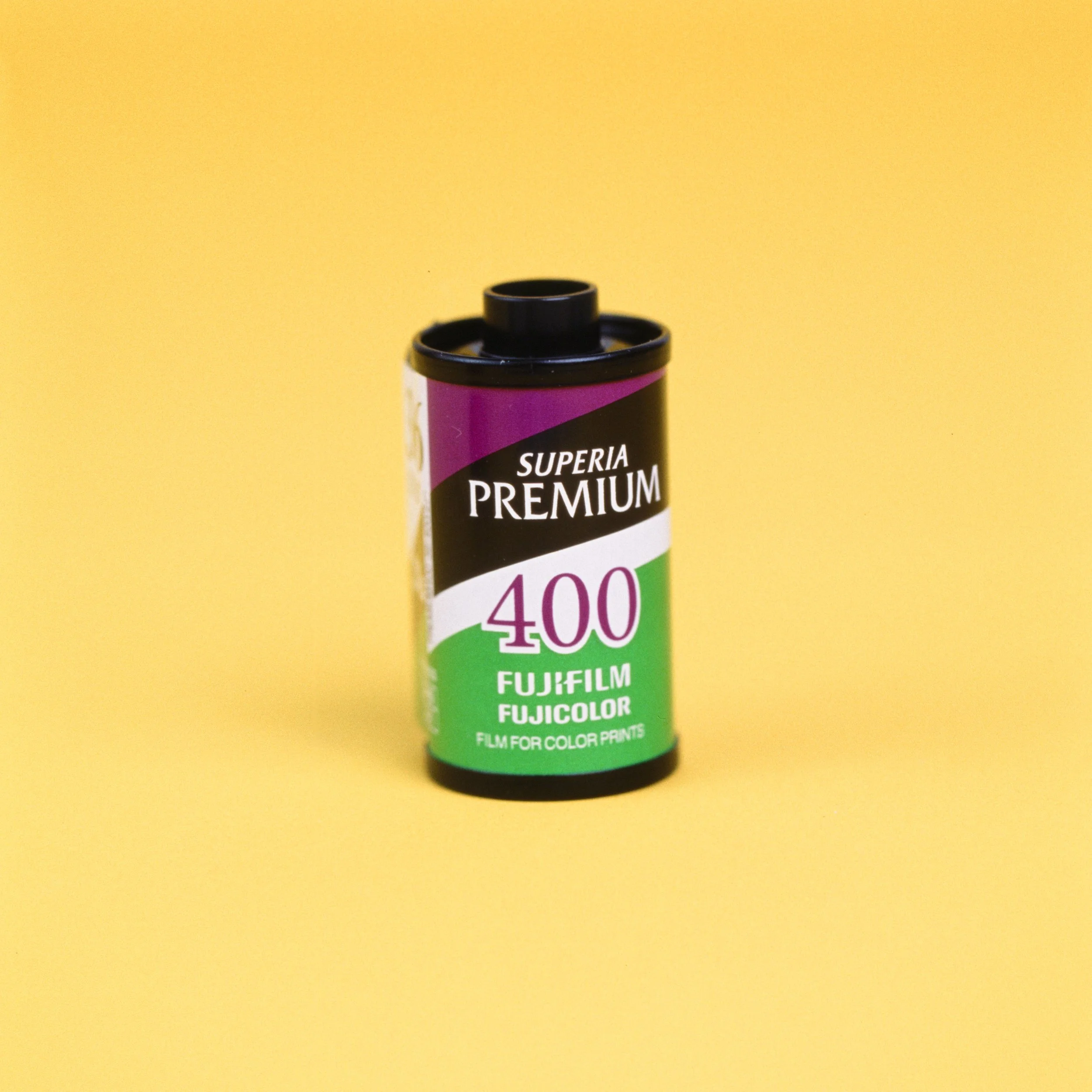
Fujifilm Superia Premium 400 - 35mm - 36 exp
Fujifilm Superia Premium 400 – 35mm colour negative film, 36 exposures
ISO 400 daylight-balanced C-41 process
Japan domestic market film — finer grain and more refined rendering than standard Superia
4th colour layer technology for superior colour reproduction and skin tones
High sharpness with excellent scanning characteristics
Wide exposure latitude — handles mixed and tricky light well
Beautiful with flash — skin tones hold up exceptionally well
Best for: portraits, everyday shooting, travel, street, and low-light photography
Fujifilm Superia Premium 400 35mm Film (C-41)
Fujifilm Superia Premium 400 is one of the most sought-after consumer colour films in the world — and one that most Australian photographers have to go out of their way to find. Originally produced for the Japanese domestic market, it sits at the top of the Superia consumer lineup and offers a level of technical refinement that puts it well above the standard Superia X-TRA 400 sold internationally.
What makes it special is Fujifilm's fourth colour layer technology, which gives the film more accurate and nuanced colour reproduction — particularly in the mid-tones and skin tones — than standard three-layer emulsions can achieve. The result is a film that shoots like a fast everyday workhorse but renders with a quality that punches well above its consumer price point.
Why photographers love Fujifilm Superia Premium 400
Superia Premium 400 has a character that's distinctly Fujifilm — cooler and more neutral than Kodak's warm consumer stocks, with greens that are clean and natural, blues that are clear and accurate, and skin tones that are genuinely flattering without needing correction. It's the kind of film that looks great straight out of the scanner with minimal adjustment, which makes it a favourite for photographers who want consistent, reliable results without spending time on colour grading.
At ISO 400 it's genuinely versatile. It handles bright daylight well, performs confidently in open shade and overcast conditions, and holds up surprisingly well in lower indoor light. The wide exposure latitude is forgiving of imperfect metering, and it responds particularly well to slight overexposure — a stop over gives skin tones a lovely softness without blowing highlights.
Its reputation with flash is also worth noting. Many ISO 400 films can look harsh or clinical when paired with a flash unit; Superia Premium handles it with considerably more grace, rendering skin tones naturally even under artificial light. This makes it a strong choice for social events, parties, and indoor shooting where you're mixing flash with ambient.
Camera pairings: Canon Sure Shot, Contax T2, Nikon L35AF, Olympus Stylus Epic, and Ricoh GR1 all suit it well, as do SLRs like the Nikon FM2, Canon AE-1, and Olympus OM-1.
A bit of film history
The Superia Premium name has existed in various forms in Fujifilm's Japanese domestic lineup for decades, always representing the top tier of their consumer colour negative range. Japan's domestic film market has historically supported a wider and more refined selection of films than export markets, and Superia Premium 400 is a direct beneficiary of that — it was developed to meet the high expectations of Japanese consumers and has never been widely distributed outside of Japan. Finding it available in Australia is a genuine opportunity to shoot a film that most photographers in the world don't have easy access to.
Processing
Fujifilm Superia Premium 400 requires standard C-41 colour negative processing. We process C-41 in-house at Ikigai Film Lab in Melbourne, with scanning available on our Fujifilm Frontier and Noritsu HS-1800 scanners.
Common questions
What makes Superia Premium 400 different from standard Fujifilm Superia X-TRA 400?
Superia Premium 400 uses a four-layer colour technology compared to the three-layer emulsion of standard Superia X-TRA. This gives it more accurate mid-tone reproduction, finer grain, better skin tone rendering, and improved scanning characteristics. It's a meaningfully better film — not just a repackaging of the same emulsion.
How does Superia Premium 400 compare to Kodak Ultramax 400?
Both are ISO 400 consumer colour negatives, but they have distinctly different characters. Superia Premium is cooler and more neutral with a refined, accurate colour palette. Ultramax 400 is warmer and more saturated with Kodak's signature punchy look. If you prefer Fujifilm's clean, neutral rendering over Kodak's warm vibrancy, Superia Premium is the better pick. If you love warm, bold colour, Ultramax is the way to go.
How does it compare to Fujifilm's professional films like Fujicolor Pro 400H?
Fujicolor Pro 400H has been discontinued, which makes Superia Premium 400 an interesting alternative for photographers who loved Pro 400H's neutral, refined character. Superia Premium isn't identical — Pro 400H had a different curve and even more refined skin tone rendering — but it shares the same Fujifilm DNA and is arguably the closest still-available 35mm film to that aesthetic.
Is Superia Premium 400 good with flash?
Yes — it's one of its standout qualities. The film handles flash-lit scenes with more naturalness than many ISO 400 stocks, rendering skin tones accurately and avoiding the harsh, clinical look that some fast films can produce under artificial light.