Kodak Tri-X 400 - 35mm - 36 exp
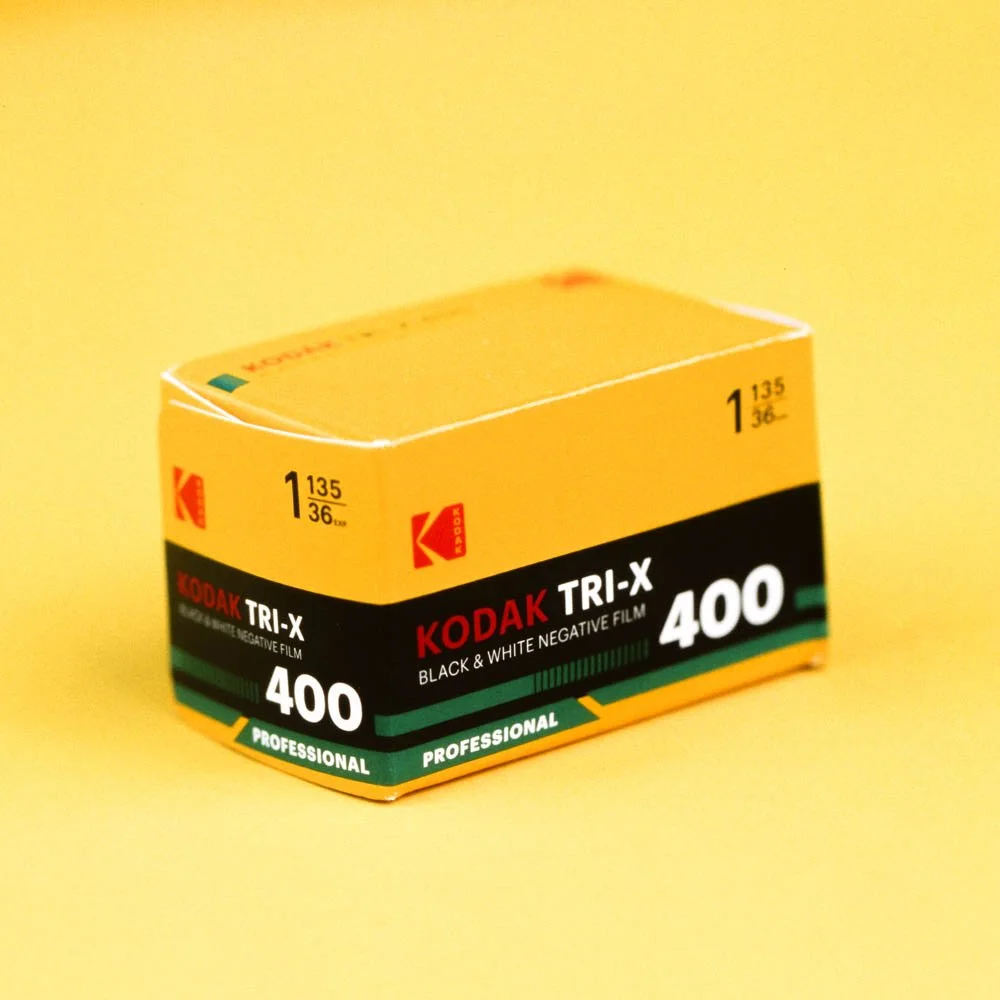

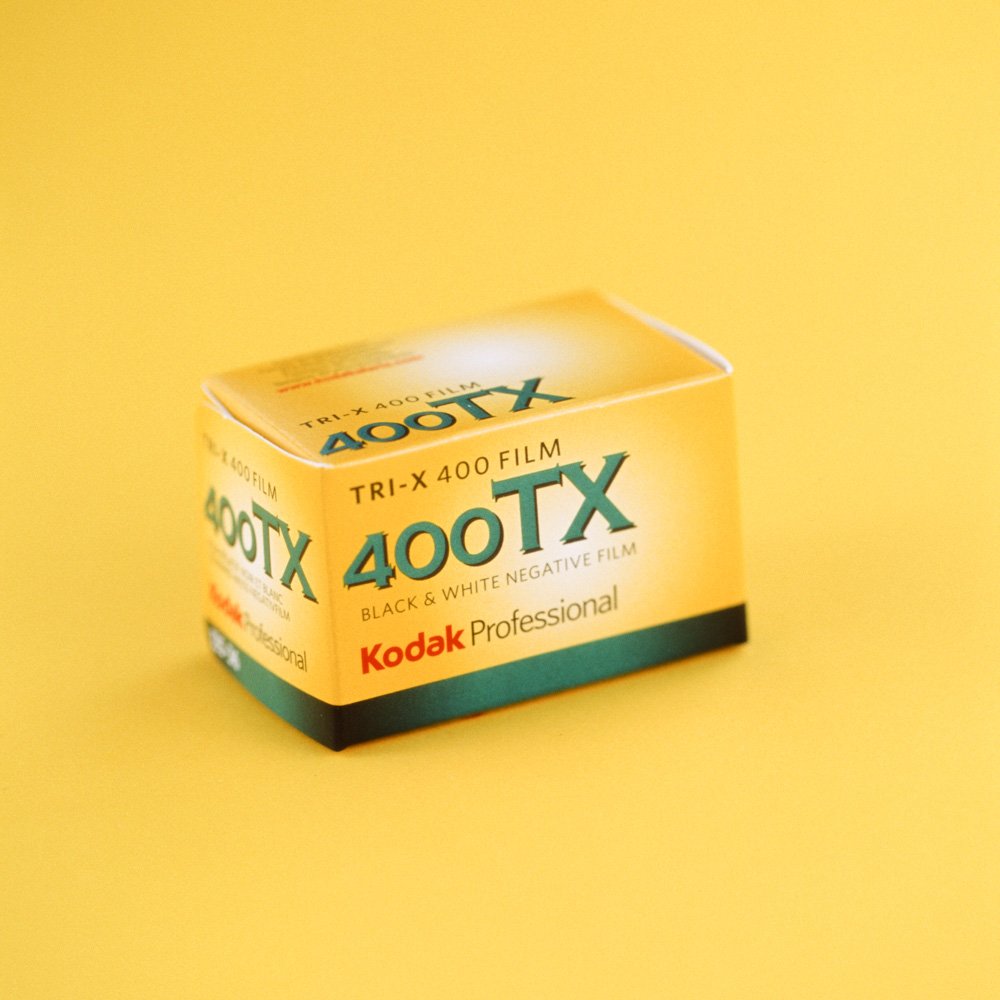
Kodak Tri-X 400 - 35mm - 36 exp
Kodak Tri-X 400 – 35mm panchromatic black and white film, 36 exposures
ISO 400 in standard black and white chemistry
Classic grain structure with high sharpness and edge detail
Wide exposure latitude with consistent tonality
Responds exceptionally well to push processing
One of the most iconic film emulsions in photographic history
Best for: street photography, portraiture, documentary, and low light
Price is per roll
Kodak Tri-X 400 35mm Black and White Film
Kodak Tri-X 400 is one of the most celebrated film emulsions in the history of photography. Introduced in 1954, it defined the visual language of documentary and street photography for decades — and it still does. The grain, the contrast, the tonal quality — there's a reason photographers have been reaching for Tri-X for over 70 years.
It's a panchromatic black and white film rated at ISO 400, processed in standard black and white chemistry, and it remains one of the most versatile and characterful films available today.
Price is per roll.
Why photographers love Tri-X
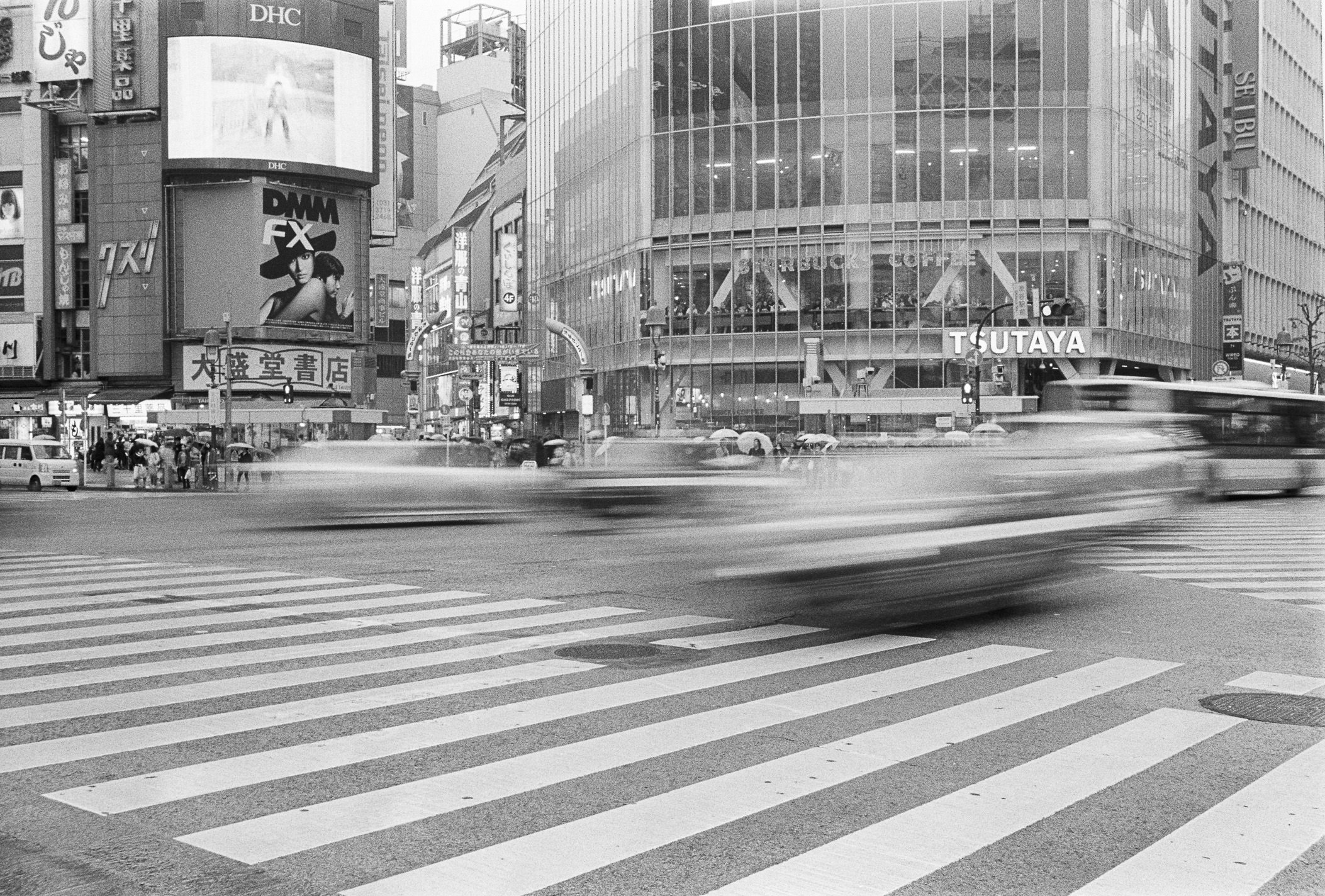
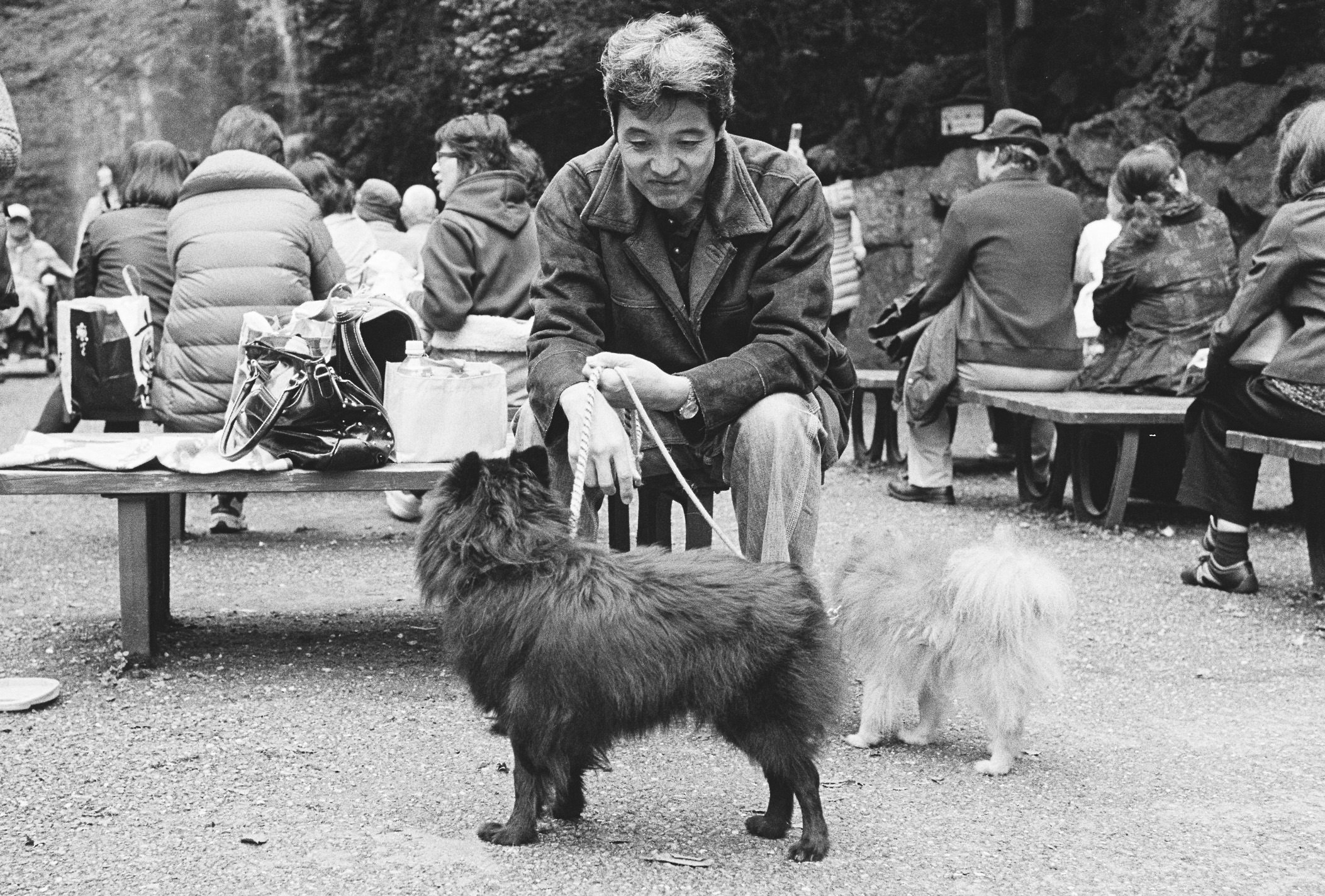
Tri-X has a look that no other film can replicate. The grain is visible, intentional, and beautiful — not fine and clinical like TMAX, but chunky and organic in a way that adds texture and life to every image. The contrast is high, the blacks are deep, and there's a quality to the highlights that feels inherently cinematic.
It's a film that photographs people and places with authority. Street scenes have grit and energy. Portraits have weight. Architecture feels solid. Whatever you point it at, Tri-X has a way of making it look significant.
It pushes exceptionally well too. At 800 the contrast cranks up and the grain becomes more pronounced. At 1600 it takes on the legendary high-grain, high-contrast look that photojournalists and documentary photographers have chased for decades. Cartier-Bresson, Winogrand, Arbus, Parks — this is the film they shot.
A bit of film history
Kodak introduced Tri-X in 1954, making it one of the longest-running film emulsions ever produced. At ISO 400, it was fast enough to handle the available light conditions that photojournalists worked in — newsrooms, courtrooms, concert halls, street corners at dusk. It became the default film of documentary photography and stayed that way for most of the 20th century. The current emulsion has been refined over the decades but retains the character that made it iconic.
Processing
Tri-X 400 is developed in standard black and white chemistry. We process black and white film in-house at Ikigai Film Lab in Melbourne, with scanning available on our Fujifilm Frontier and Noritsu HS-1800 scanners.
Common questions
How does Tri-X compare to Ilford HP5?
Both are ISO 400 black and white films with a classic, organic character — but they have a distinctly different look. Tri-X has more contrast, deeper blacks, and a grain structure that's chunkier and more pronounced. HP5 is softer, more neutral, and more forgiving of exposure errors. Many photographers describe Tri-X as the more dramatic, characterful option and HP5 as the more versatile, workmanlike choice. Neither is better — they suit different tastes and subjects.
How does Tri-X compare to Kodak TMAX 400?
Very different films. TMAX 400 is a modern T-GRAIN emulsion built for technical excellence — finer grain, smoother tones, and better scanning performance. Tri-X is a classic conventional emulsion with a distinctive gritty, high-contrast look that TMAX doesn't replicate. If you want the cleanest, sharpest ISO 400 black and white film, shoot TMAX. If you want the look that defined 20th century photography, shoot Tri-X.
Can I push Tri-X 400?
Yes — Tri-X is famous for its push processing performance. Pushing to 800 gives more contrast and a punchier look. At 1600 it takes on a dramatic, high-grain character that many photographers seek out deliberately. We offer push processing as an add-on when you send your film in.